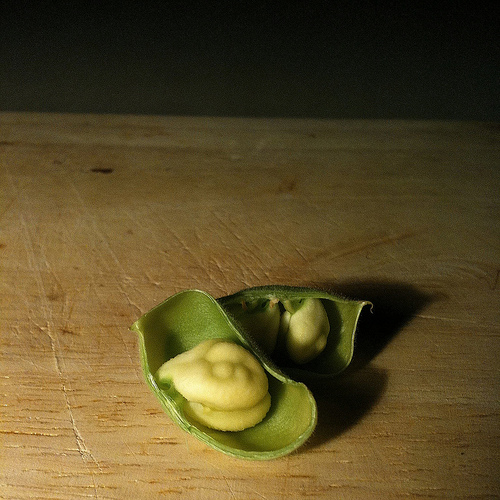
Fresh chickpeas are a great source of protein, calcium, zinc, and folate. They possess high levels of dietary fiber and they taste great! Fresh chickpeas have a taste similar to the bean in a fresh green bean with an extra little nutty kick.
What do you do with them? Toss a couple handfuls in a salad to make it a meal. Or, saute them gently in butter for a lovely side dish. Tossed with brown butter and pasta, they make a wonderfully hearty meal. Or, roast them like chestnuts in the oven. I’ll be trying this tonight.
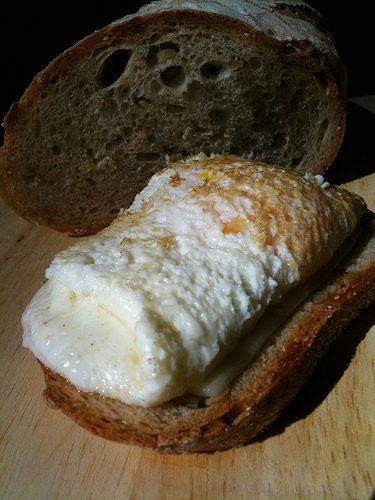
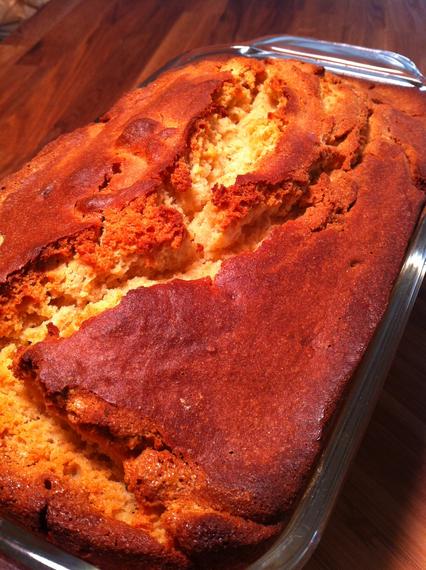
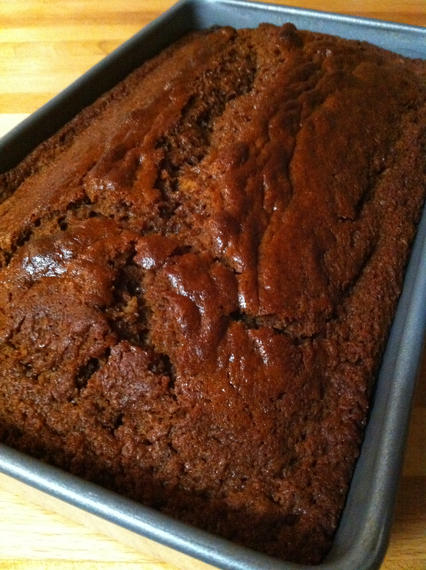
Emmenthaler complements the nutty richness of this championship loaf with whole grain.
Frying with Stainless Steel
Cooking with stainless steel offers a number of benefits. It will not affect flavor or react with acidic foods during the cooking process. It allows for a superior method to caramelize meats and vegetables. Anyone who has compared the results of nonstick surfacing to stainless steel will agree. Carmelization occurs rappidly. The dark, even color improves the look and taste of every dish. Stainless steel might not be the best heat conductor. But, given the ease of maintainence and longevity, it’s a great alternative to copper. If cared for properly, stainless steel pots and pans can have a nearly infinite life span. Some claims state that a high quality stainless steel pan could last for 100 years.
Copper, another great heat conductor, requires significantly more maintainence and will react with some foods. It is also the priciest option. Thin copper is known to lose its heat rapidly. Depending on the circumstances, this could be a positive or negative feature. Aluminum is a lightweight and inexpensive alternative. It conducts heat almost as efficiently as copper. But, health-related concerns in relation to its use will keep it out of my kitchen for now.
Tips for frying:
-
Avoid high heat… moderate to moderate-high heat provides the best result.
-
Olive oil is needed when frying delicate foods… like eggs and fish. (Looking for a fat-free method of cooking eggs in stainless steel? Poach or boil)
-
Vinegar is a cost-effective and chemical-free method to clean and remove any discolaration. (Buff away discoloration with a combination of water and vinegar with a soft towel.)
-
Never use steel wool on stainless steel. Steel wool and other rough surface cleaning pads may scratch polished stainless steel.
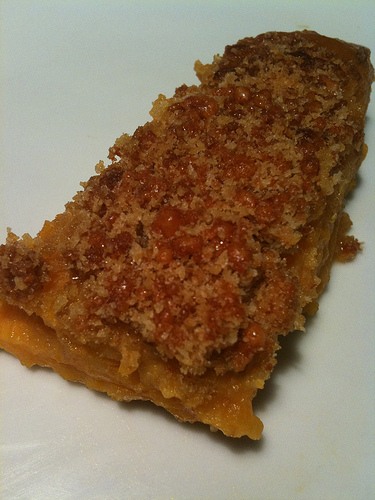
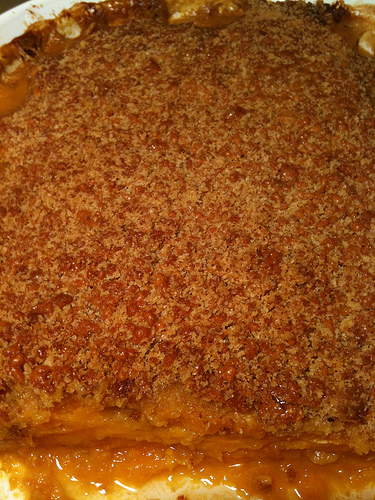
Layered Sweet Potato Casserole
Makes 8-10 servings
1-2 large sweet potatoes, thinly sliced
3 cups Sweet Potato & Onion Soup
2-4 oz. Emmenthaler Cheese, grated
1 cup fresh bread crumbs
Coat the bottom of a casserole dish lightly with Sweet Potato & Onion Soup. Layer sweet potatoes along the bottom of the casserole dish(overlapping them slightly). Lightly sprinkle sweet potatoes with grated Emmenthaler. Continue layering soup, sweet potatoes and half of the grated Emmenthaler until all of the sweet potatoes are used. Stir remaining 2 oz. Emmenthaler into the bread crumbs to combine. Cover casserole dish with its lid and bake in 325 degree oven for 45 minutes. After 45 minutes remove lid and continue baking for an additional 20-30 minutes. Serve with roasted chicken & buttered green beans.
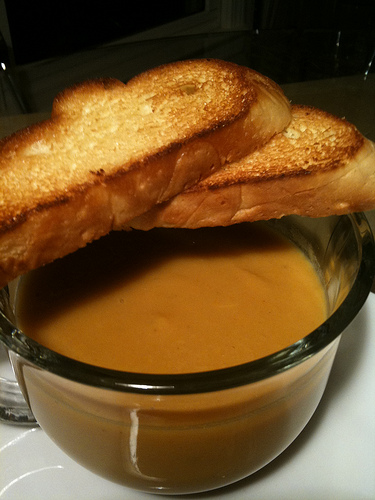
Sweet Potato & Onion Soup
Makes 8 cups
1 large sweet potato, diced
3 large onions, diced
1/4 cup celery, diced
1/2 cup carrots, diced
3-4 tbsp olive oil
4 cups vegetable stock
1/4 tsp cayenne
one small splash of apple cider vinegar
salt & pepper, to taste
1 cup of water, or as needed
Sauté diced onions with 3 Tbsp. olive oil in a small stock pot until golden brown. Add remaining veggetables and an additional tablespoon of olive oil (if desired). Continue sautéing over moderate heat until the remaining vegetables become fork tender and they begin to pick up a little bit of color.
Add one small splash of apple cider vinegar. Stir briefly. Add cayenne, vegetable stock, pepper, and salt. Simmer over low heat for 15-20 minutes. Allow to cool. When cool, use a food processor or blender to puree the soup (in batches, if necessary). Return to stock pot and simmer. Add water, if needed, to reach the consistency you prefer. Serve with lightly buttered toast squares.
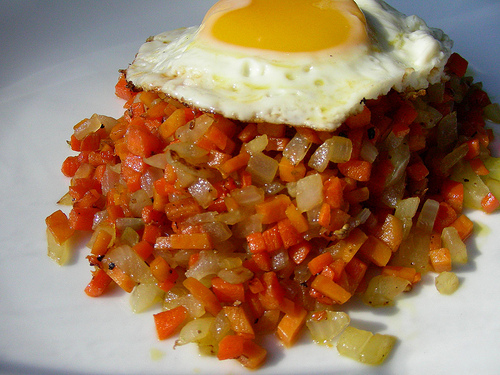
While my precision might be lacking, the flavors were all there. And, the (mostly) uniform cuts allowed for quick cooking. Five minutes of prep and five minutes of cooking yeilded a lovely breakfast.
Reject Root Vegetable Hash
serves 2
1 handful of onions, finely diced
1 handful of carrots, finely diced
1 handful of sweet potatoes, finely diced
1 handful of celery, finely diced
drizzle of olive oil
salt & pepper, to taste
2 fried eggs
Saute veggies with a drizzle of olive oil over moderately high heat for 4 minutes, or until slightly caramelized. Divide hash into two servings, plate, and top each mound of hash with one fried egg. Eat!
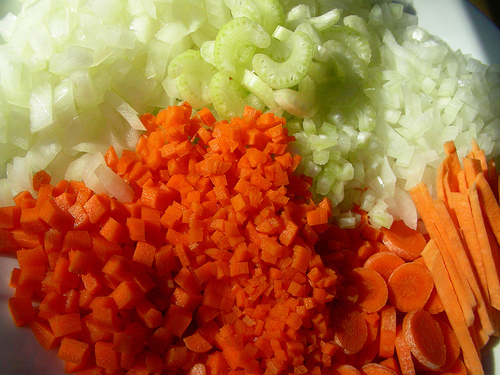
Hmm…. I’ll be working on that precision for a while.
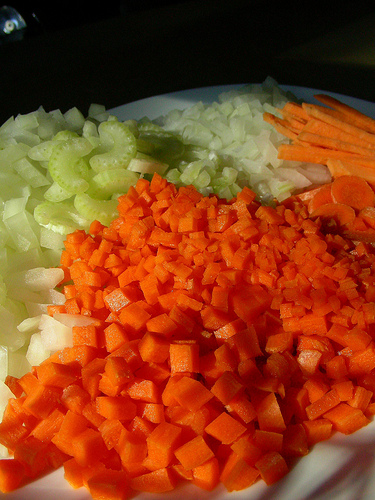
Usable? Yes. Precise? No.
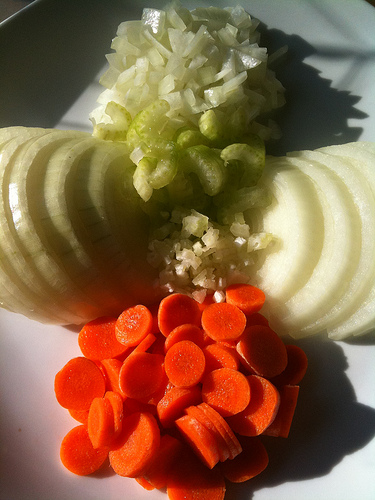
At the begining!
A solid foundation from the start will make everything easier in the longrun. So, I’ll be taking it one step at a time.
First up:
The Basic Cuts
Slice
Bias Cut
Chop
Dice
Mince
Shred
Yes, I’ve done each of these cuts a million times. But, I will start right by doing them all again. And, safety is (and always will be) my primary concern.
This introductory list will grow as my skills progress.
Mastering the Art of French Cooking, Volumes 1 & 2 by Julia Child, Simone Beck, & Louisette Bertholle
Larousse Gastronomique by Prosper Montagne & Larousse Gastronomique
The Escoffier by Auguste Escoffier
The Professional Chef by CIA
The Chef’s Art by Wayne Gisslen
Professional Baking by Wayne Gisslen
On Food and Cooking by Harold McGee
La Varenne Pratique by Anne Willan
Grand Diplome Cooking Course, 20 volume set complete by Anne Willan
|
|