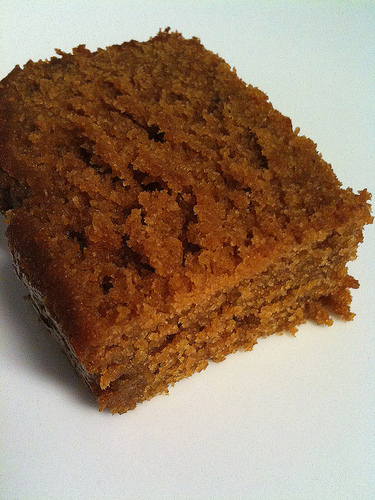
Gingerbread
2 1/3 cups AP Flour
1 tsp baking soda
1 heaping tsp ground ginger
1 tsp ground cinnamon
1/4 tsp ground nutmeg
1/4 tsp ground clove
1 cup butter
2/3 cup sour cream
1 cup molasses
1 cup sugar
1 large egg
3/4 cup hot water
Preheat oven to 350 degrees.
Combine dry ingredients and stir vigorously with a fork to combine. Cream butter, sour cream, and sugar. Then, add molasses and egg. Beat until combined. Slowly, add the dry ingredients to the wet as you beat gently. Add hot water as you add the last of the dry ingredients. Pour into cupcake papers, buttered loaf pans or buttered sheet pan. (I usually make 12 cupcakes and 1 loaf.) Bake at 350 degrees for 18 minutes for cupcakes, 50-60 minutes for loaf pan, and 30-35 minutes for sheet pan. Remove from oven and cool. Dust with powdered sugar.
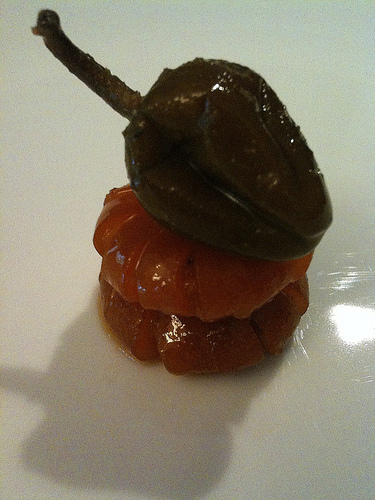
Mostarda has a variety of regional adaptations within Italy. Mostarda di Cremona is a variant that is relatively easy to find in the US. And, foods that are easily accessible work their way into the fabric of our cooking. The version below is a basic recipe for mostarda that I enjoy. But, in the future, I’ll be experimenting with more regional-specific versions (Mantua, Venice, and Sicily offer great variations… there is even a Dalmatian variety I would like to try)
Mostarda
makes 3 cups
1 cup candied orange
1 cup candied lemon
1 cup dry white wine
1 cup sugar
juice of one orange
juice of one lemon
1 healthy splash of white wine vinegar
4 Tbsp. dry Colman’s Mustard Powder
1 tsp dried red pepper, ground
1 tsp black pepper, coarsely ground
Combine all ingredients in a small saucepan and simmer 20 minutes. Serve as an accompaniment to roasted meats or bollito misto. (I like to puree the finished mostarda and serve it as a condiment with cheese plates.)
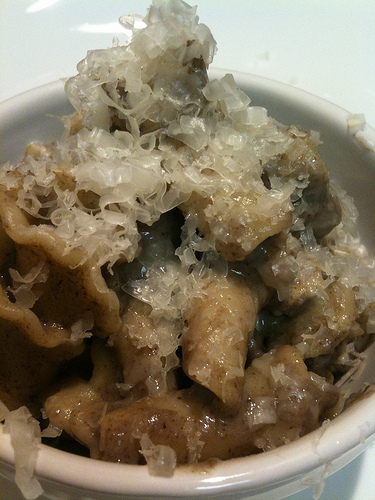
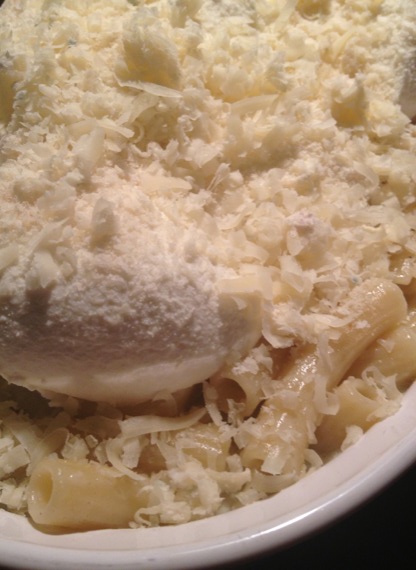
Portobello Pasta with Emmentaler
1 lb dried pasta ( I like Campanelle)
3 cups Cream of Portobello Mushroom Soup
1 cup chicken stock
1/2 cup sour cream
1 tsp finely ground black pepper
salt, to taste
Emmentaler, for shaving on top
Boil 5 quarts of water in a large stock pot. Add salt at the boil. Stir. Add pasta and stir briefly. Reduce heat to a gentle rolling boiling and allow to cook for 9 minutes. Strain and return to pot. Add chicken stock, mushroom soup, and black pepper. Place over moderate heat for 5 minutes or until it reaches the desired temperature for serving. Gently stir sour cream into the pasta and add salt, if needed. Plate pasta and generously shave Emmentaler cheese on top.
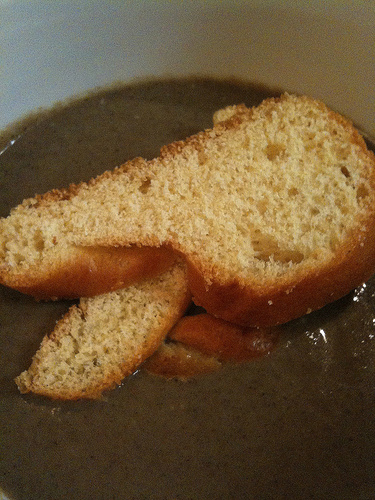
Cream of Portobello Mushroom Soup
makes 8-9 cups
6 portobello mushroom caps, sliced
1 large onion, sliced
5 cloves of garlic, sliced
3 cups chicken stock
3 cups whole milk
3 Tbsp flour
2-3 Tbsp butter
1/4 cup Cognac
1 tsp salt
1 tsp black pepper, finely ground
Saute onions until golden brown in a small stock pot. Add garlic, mushrooms, salt & pepper; saute for an additional 2-3 minutes. Deglaze the pan with 2 cups of chicken stock. Briefly let the mixture cool and puree mixture in a food processor until smooth. Set aside.
Melt butter in the stock pot. Add flour and allow to bubble. Slowly pour in the last cup of chicken stock, stirring vigorously to remove any lumps. Add the puree of mushrooms & cognac; allow to simmer. Add milk in 1 cup batches, allowing soup to simmer after each addition. Add up to 3 cups of milk to reach the consistency you desire.
Serve with freshly-made croutons, buttered toast or thin slices of bread.
Other Uses:
– Make risotto
– Make lasagna by layering sauteed mushrooms, cheese & Cream of Portobello
– Toss with buttered pasta for a simple pasta sauce
– Use a portion as the base for a turkey & mushroom gravy
-Add to a mushroom-based stuffing
– Make pot roast or braised meat using the soup as a base
– Make the best old-fashioned green bean casserole of your life (with fresh green beans & wild mushrooms)
– Make a potato gratin substituting Cream of Portobello Soup for heavy cream
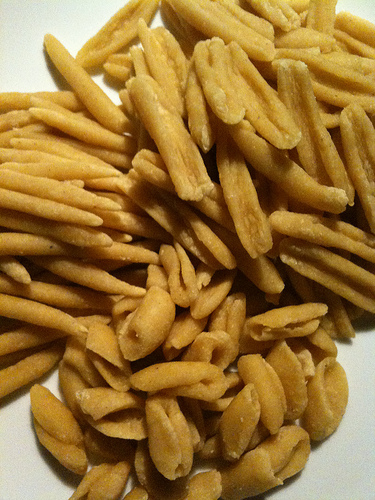
Cavatelli, “Four-Finger” Cavatelli, & Trofie
I was about 6 years old the first time I made pasta from scratch. I remember sitting at the dining room table with my Gram. She set a wooden cutting board in front of me with a mound of flour. She sprinkled a little salt on top, made a well, and broke one egg into the middle. She told me to work the flour with my fingers. “Slowly… pull it into the egg.” I remember working carefully to prevent the egg from spilling over the edge. It took a few minutes to work the flour into the egg. My Gram handled the last few strokes… kneading the dough into a smooth ball. But, I made that pasta myself… from scratch. I remember rolling strips of dough into logs, cutting them into small pieces, and rolling them with my thumb. Presto! …homemade pasta. I was so proud of myself.
Now, all these years later, the process is the same. But, I don’t need help kneading the dough anymore. It does take a bit of strength to knead the dough. It is harder and denser than bread dough. It might take a little practice. But, if a child can do it…
Cavatelli
(or as Gram would call it… Cavatell)
1 cup unbleached AP flour
1/2 cup semolina
1 tsp salt, finely ground sea salt
2 small eggs
Place 1 cup of flour on a wooden cutting board. Make a tall mound and press a well into the center. Sprinkle 1 tsp of salt over the flour. Break eggs into the well and slowly draw the flour in with your fingers or a fork. Gradually work most of the flour into the dough. As the dough begins to form a ball, it’s time to knead. Knead the dough until smooth. It should have the consistency of dense bread dough. Wrap in plastic wrap and let rest for 10 minutes.
After 10 minutes, break off a handful of dough. Roll into a thin log. Cut log into small 1/2 inch pieces for cavatelli. When, the first log is cut into pieces, take one piece of dough. Set it on the lightly floured cutting board and press it under your thumb… rolling gently as you do. Repeat. Set rolled cavatelli on a separate cutting board to dry. By the time you finish rolling all your dough, it should be ready to store in the fridge until use. Use the same day. Or, store overnight in the fridge. But, this is fresh pasta… Use it!
For Four Finger Cavatelli: Simply cut dough into 1 inch pieces instead of 1/2 inch pieces. Then, roll with your three middle fingers instead of your thumb.
For Trofie: Roll 1/2 inch pieces of dough between your palms. The finished product should be tapered at the edges. Then, twist, if desired.
Note about Trofie: I believe traditional Ligurian Trofie should be made with water in place of eggs. And, ground chestnuts should be incorporated into the dough. I’ll be testing this…. soon!
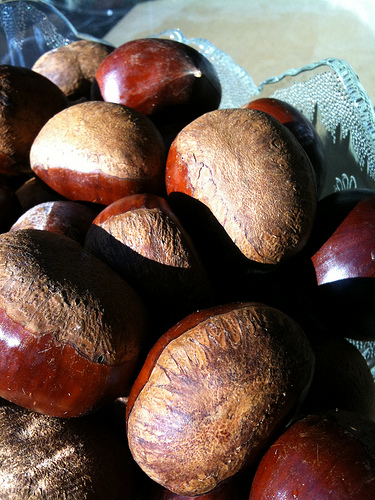
Chestnuts the size of golfballs!
I love chestnuts. The smell of roasting chestnuts holds the memories of countless happy holidays. They can be roasted, candied, baked in cookies, cakes & bread. Mmm… and my favorite panettone! And, I haven’t even mentioned the savory applications. But, every year the first thing I do with a fresh batch of chestnuts is roast them.
Roasting Chestnuts
The first step? Carefully, carve small crosses into the thick shell of each chestnut. CAREFULLY!! No one wants to ruin their holiday with a trip to the emergency room for stitches or a tetanus shot.
Then, dump the lot into a big pot of boiling water. Boil for 5-10 minutes. Strain and line a roasting pan with a single layer of chestnuts. Bake at 425 degrees for 25-35 minutes. (Or longer, if you want deep roasted flavors. They’re particularly tasty eaten steamy hot right out of the shell.) Piled deep in a covered bowl, chestnuts stay warm for ages. And, don’t forget… Once they get cold, they’re harder to peel.
Want even more smoky, roasted flavor? Roast them outside on a grill with charcoal and the wood of your choice. I prefer using a mild wood, like cherry. But, if you want to smell like hickory for the next two days… go for it!
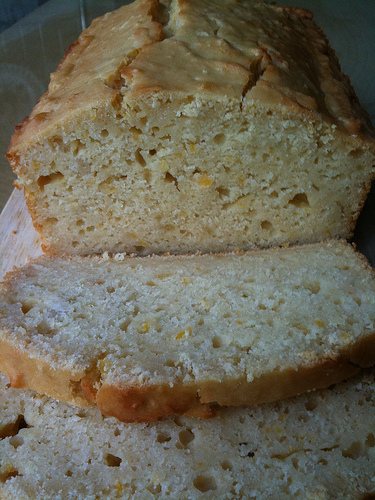
Lemon Marmalade Cake
ï3 cups sifted flour
ï1 teaspoon soda
ï1/4 teaspoon salt
ï1/2 cup vegetable oil
ï1 1/2 cups sugar
ï3 eggs, beaten
ï1 cup lemon marmalade
ï1 cup yogurt
1 tsp vanilla extract
Cream together yogurt, marmalade, eggs, sugar, vanilla extract and vegetable oil. Sift together flour, baking soda, baking powder, and salt. Combine the two gently.
Bake at 350 for 45-55 minutes.ï3 cups sifted flour
3 cups AP Flour
1/2 teaspoon baking soda
1/2 teaspoon baking powder
1/4 teaspoon salt
1/2 cup vegetable oil
1 1/2 cups sugar
3 eggs, beaten
1 cup lemon marmalade
1 cup yogurt
1 tsp vanilla extract
Preheat oven to 350 degrees.
Blend yogurt, marmalade, eggs, sugar, vanilla extract and vegetable oil until smooth and creamy. Sift together flour, baking soda, baking powder, and salt. Combine the two gently, adding the flour mixture in increments. Butter two small loaf pans or 1 bundt pan. Add batter to the pan (or pans), the batter should not fill more than 3/4’s of the pan.
Bake at 350 degrees for 45-55 minutes.
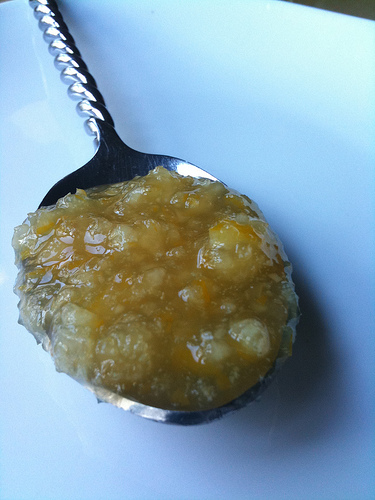
This small batch of lemon marmalade is meant for immediate use. If you intend to make a large batch for canning, be sure to use proper canning techniques.
Lemon Marmalade
4 lemons, sliced with seeds removed
4-5 cups granulated sugar
1 cup water
Place lemon slices and water in a food processor. Process until lemon peel resembles large crumbs. Pour mixture into a medium-sized saucepan. Boil and reduce to a simmer. Simmer for 45-60 minutes, or until lemon rind is tender. The lemon rind will take on a translucent appearance as it candies. Use immediately. This makes a lovely marmalade for toast, crepes, pancakes, and pound cake. Also, a small spoonful is delicious dolloped on top of vanilla yogurt.
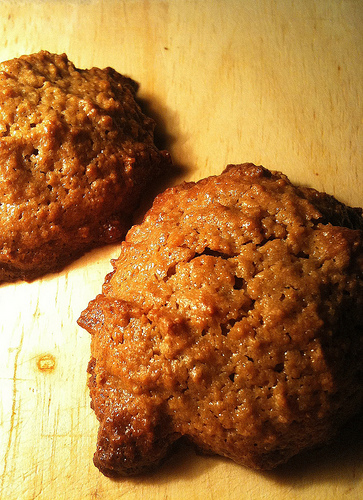
Sunflower Butter Cookies
makes over 2 dozen cookies
1 1/2 cups sunflower butter (we used Trader Joe’s)
1 cup extra fine granulated sugar
1 egg
1 heaping cup finely ground cake crumbs
Beat sunflower butter, sugar and one egg until smooth. Then, fold in cake crumbs. Drop small spoonfuls onto a well-buttered baking sheet. (To omit adding extra butter, use parchment or silpat mats) Bake at 350 degrees for 12-15 minutes. The cookies should be dark gold around the edges. Enjoy!
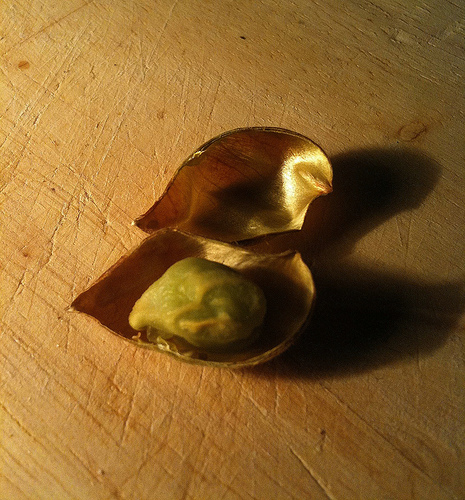
Roasted for 25-30 minutes at a temperature of 375 degrees, the chickpea flavor intensifies. The nutty, savory flavors are noticeably richer and deeper. And, the caramelization that occurs with roasted vegetables add another layer of rich, savory goodness.
We roasted a second batch for 45-50 minutes. As you would expect, even more moisture is extracted. The chickpeas take on even more nut-like characteristics. The texture is reminiscent of a soft roasted chestnut and the flavor bares some similarity to a boiled peanut without the added salt. However, none of the unpleasantly gritty texture is present and the taste is far superior. We added nothing to our roasted chickpeas. We ate them warm right out of the shells. Tasty and nutritious, what a perfect snack!
|
|