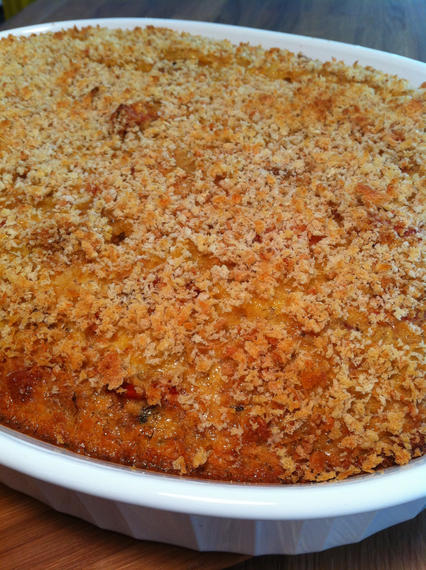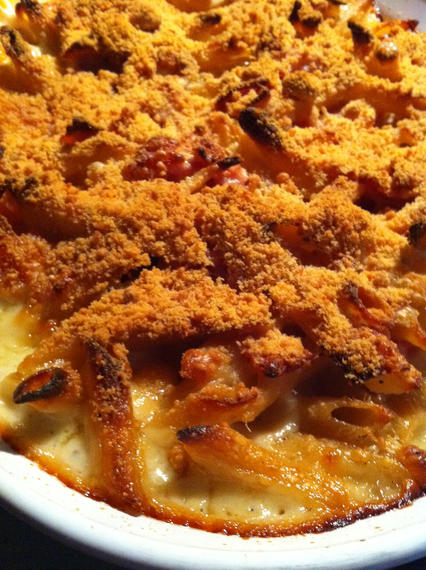
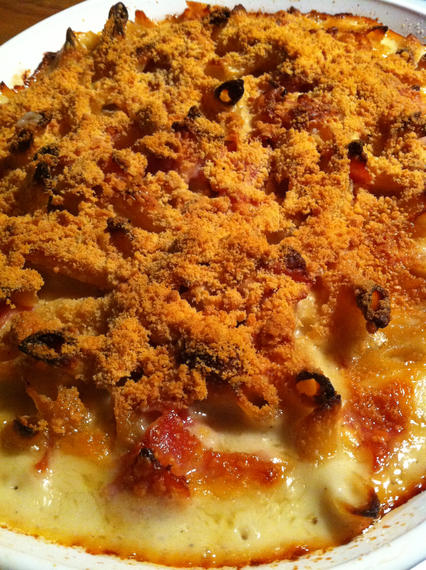
There is absolutely nothing light about this version of macaroni and cheese. As a matter of fact, it’s the exact opposite. It’s totally rich, creamy and full of great cheese flavor.
White Cheddar Mac & Cheese
makes one large casserole
1 lb penne, cooked al dente
1 heaping cup of sharp white cheddar, grated
1 cup Parmigiano Reggiano, grated
2 cups whole milk
2-3 Tablespoons butter
2 Tablespoons flour
1 cup fully cooked baked ham, diced
salt, to taste
1/4 cup bread crumbs
1/4 cup Parmigiano Reggiano, grated
In a large pot, melt butter. Add flour and cook for a minute or two to form a roux. Slowly add milk, stirring constantly to avoid the formation of lumps. Add cheeses. Stir until smooth. Then, add pasta and baked ham. Pour into a large casserole dish.
In a food processor, pulse Parmigiano Reggiano and bread crumbs. Sprinkle evenly over macaroni and cheese. Bake at 375 degrees for 40-45 minutes… Or, until the top is golden brown and bubbly.
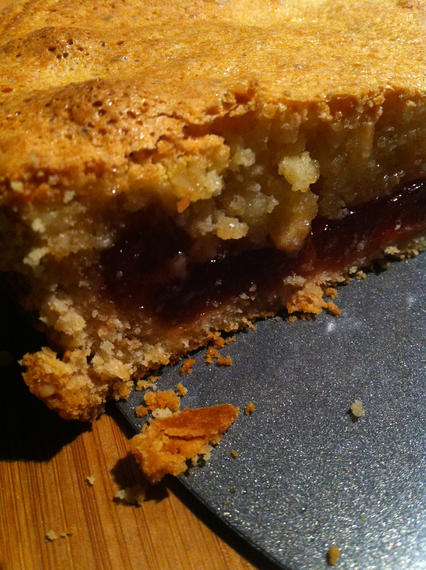
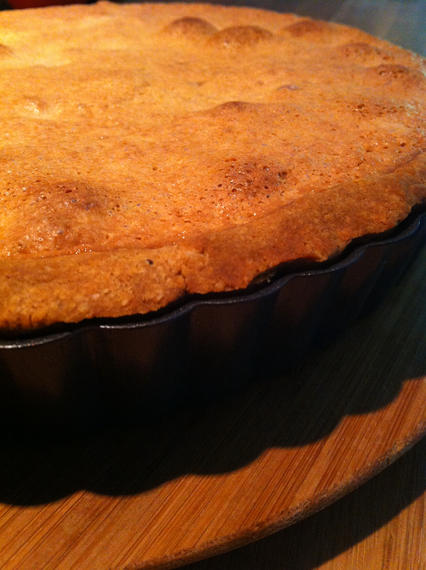
If’ I had a jar of raspberry jam on hand, you would be seeing a recipe for Linzer torte. This almond quince tart makes a very satisfactory second choice.
Almond Quince Tart
Tart Shell:
1 cup blanched almonds
1 scant cup AP flour
1/2 teaspoon cinnamon
1/8 teaspoon ground clove
1/2 cup butter
1 small egg
1-2 Tablespoons Amaretto
1/2 teaspoon vanilla
Filling:
quince paste, sliced, use as needed
1/2 cup sugar
1 cup blanched almonds
1 Tablespoon flour
2 eggs
1 teaspoon vanilla
1/4 cup light & fruity olive oil
Prepare Tart Shell:
Grind almonds to a powder. Then, add flour, cinnamon, and clove. Pulse. Add butter. Pulse to a coarse meal. In a small measuring cup break egg. Then, add Amaretto and vanilla. Turn on food processor and drizzle egg mixture into almond mixture. Form dough into a flattened disk. Chill for 2 hours.
Prepare Filling 2 Hours Later:
Preheat oven to 325 degrees F.
Roll out tart dough and gently press it into tart pan. Trim edges. Layer 1/4 inch thick slices of quince paste along the bottom of tart shell. Place tart pan in refrigerator until needed.
Place sugar, almonds, flour, eggs, vanilla and olive oil in a food processor. Pulse until the almonds have achieved the consistency you desire. Remove tart shell from the fridge. Pour filling over quince slices. Bake in 300 degree oven for 45-50 minutes, or until golden brown and set in the center.
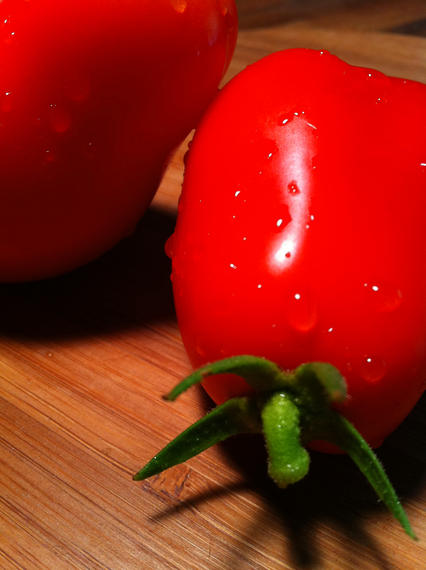
The First Two Roma Tomatoes!
My husband accused me of artistic shenanigans. Not true, I swear. Those water droplets are all natural. Now, that’s not to say I might not use poetic license in the future with a spritz of water here or a mist there. This time it’s all mother nature.
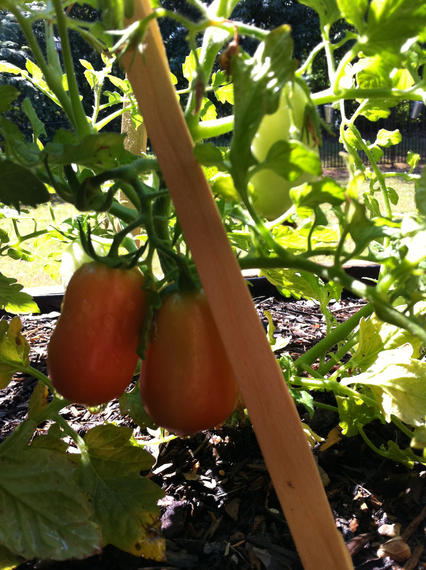
And, More Romas To Come
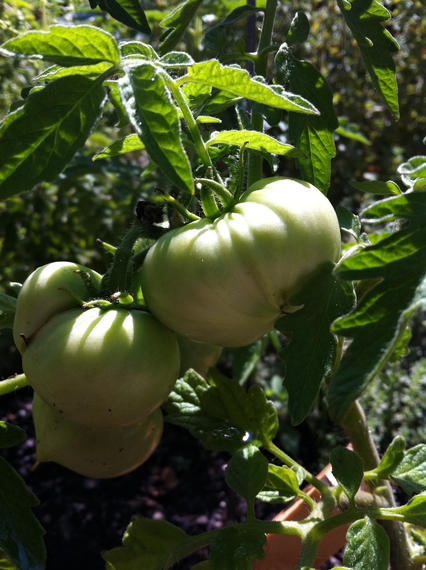
Costoluto Genovese
These are an experiment. So, we only have two plants. But, they’re very interesting. One has sprouted waist high. And, only now are the buds appearing. The other started bursting with buds at about 2 feet tall. That’s the one pictured here.
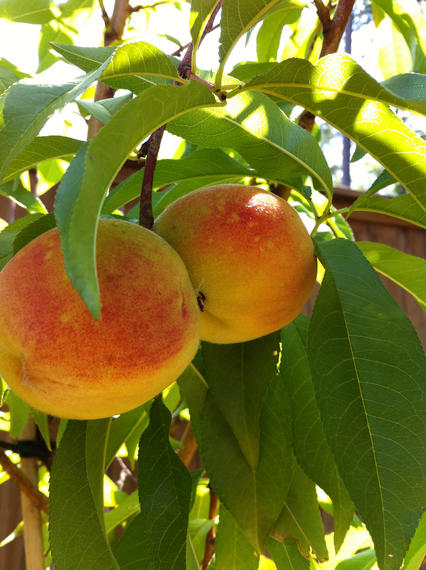
…And Then There Were Six
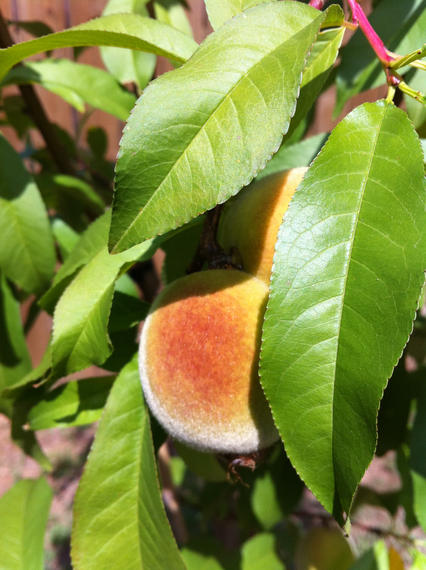
Can you see the delicate branch struggling to hold onto these peaches? It’s a miracle that little branch can hold onto these two fast growing peaches. We wouldn’t be surprised if that poor little branch snaps. We should probably remove one of those two peaches. But, we’ve decide to wait and see what happens.
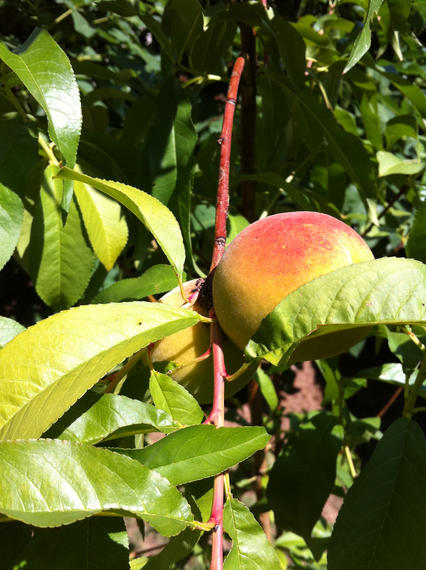
2 more of the remaining 6…
The other two are up too high to photograph in the bright sun.
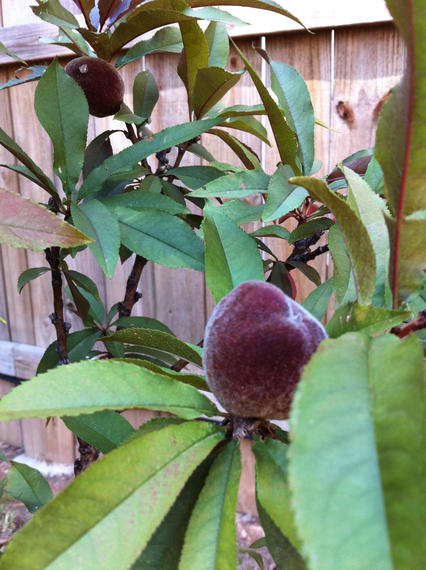
Only 4 Bonfire Peaches Are Left
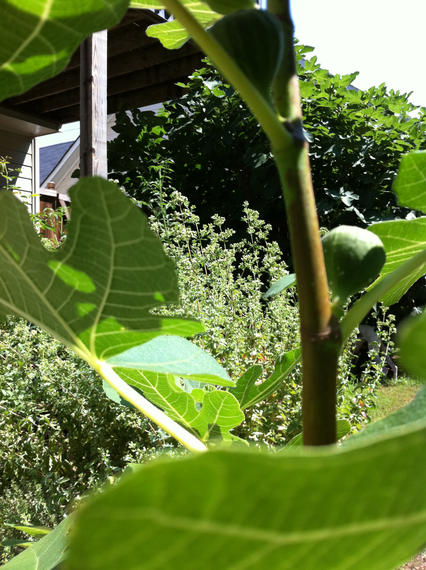
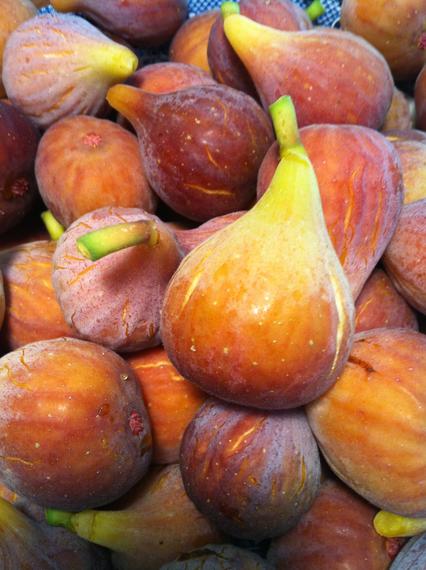
Black Mission Figs
Scattered among the three baby fig trees, we see just under two dozen figs. But, we’re very happy that all three trees appear to be extremely healthy.
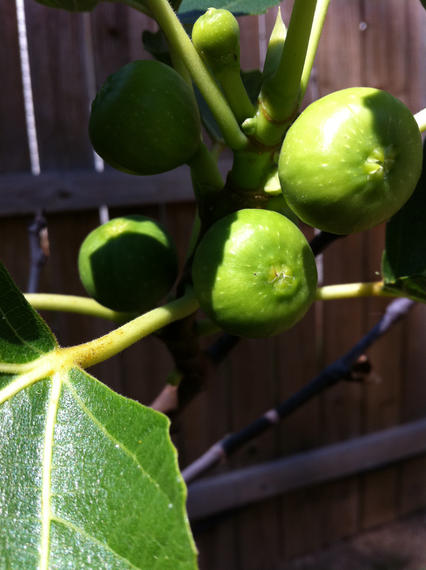
The Kadota Fig Tree That Could
…or might. This poor fig tree has the scraggly, bedraggled look of Charlie Brown’s christmas tree. Each branch has a handful of leaves and a nearly equal number of figs. With less than 30 leaves on the entire tree, how is it capable of producing almost half as many figs? It’s a little miracle.
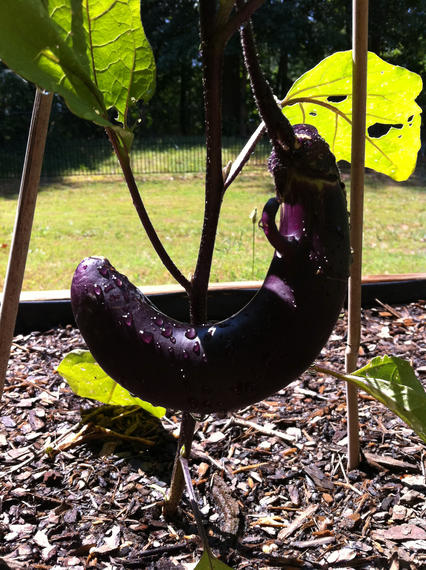
The Lone Ichiban Eggplant
We’ve never sprayed any pesticides or chemicals on our garden… nothing commercial, natural or otherwise. In the case of this growing Ichiban eggplant, it caused the loss of two little sprouting branches and three buds.
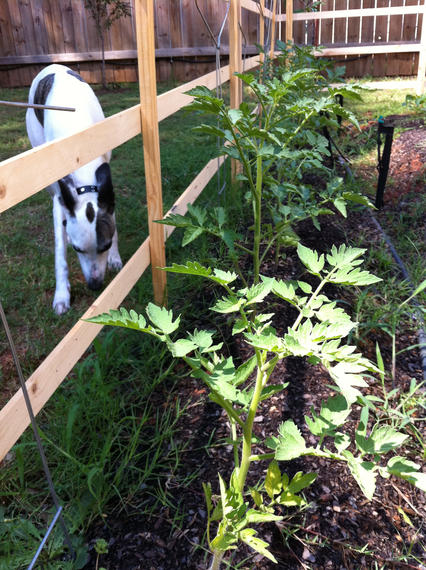
The Tomato Killer Scoping Out Her Prey… again
The mini fence is our attempt to keep her out of reach. It’ll be interesting to see if it works.
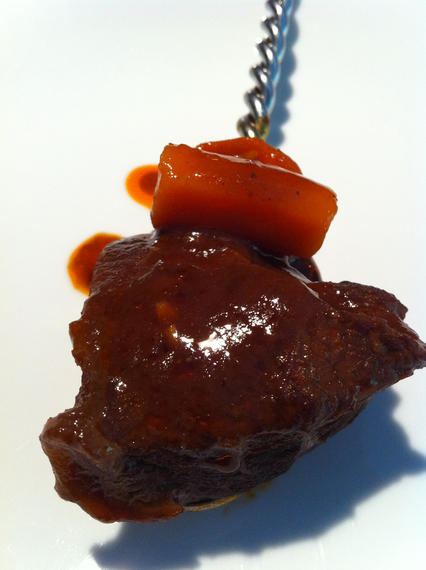
This ultra-rich dish is obviously better suited for the winter months. But, it’s so delicious. My husband and I crave it all year long. So, why wait? A rainy day (ok, fine… it was only a few clouds) gives me a perfectly acceptable excuse. Just wait until you get one whiff of that slowly reducing sauce of rich wine, herbs, spices and tomato mingling with browned beef. And, I bet you won’t even need an excuse. Beef shank adds that rich, silky extra-special “something”. It turns this everyday stew into something much greater than the sum of its parts.
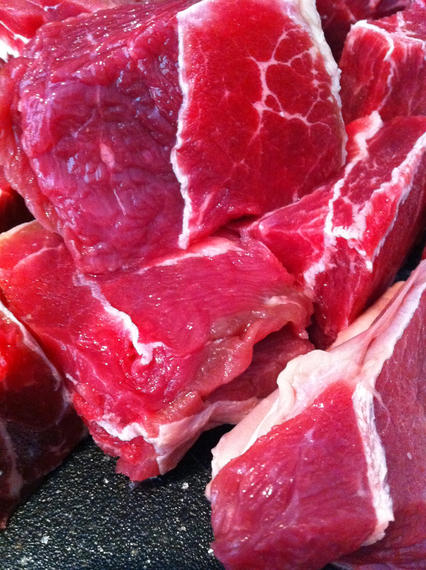
Saute Beef Chunks in Olive Oil
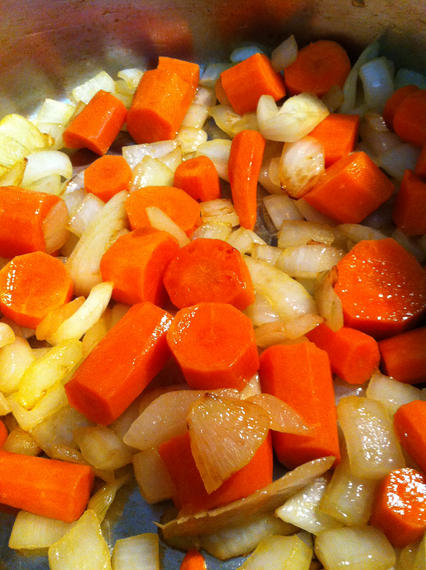
Remove beef chunk by chunk, then saute onions & carrots
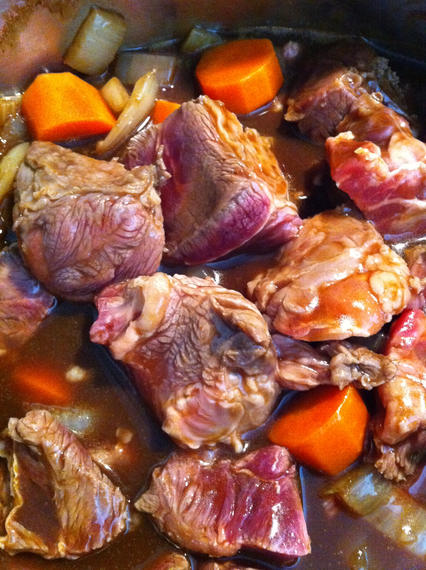
Add Wine, Rich Beef Stock & Spices
Italian Beef Shank Stew
serves at least 4
2-3 lbs beef shank, trimmed and cut into chunks
2 Tablespoons flour
olive oil, as needed
1 large Vidalia onion, diced
4 carrots, peeled & sliced
1 stalk celery, finely chopped
3 cloves garlic, diced
1 bay leaf
1/2 teaspoon dried basil
1/4 teaspoon dried oregano
1/4 teaspoon red pepper flakes
1/2 teaspoon black pepper
2 cup red wine
2 Tablespoons tomato paste
4 cups rich beef stock
Lightly toss beef chunks with flour, pat to remove all excess flour. In a large dutch oven, saute beef chunks in very small amount of olive oil. Allow each chunk of beef to brown before removing it from the pan. When all of the beef has been browned on the edges, add another tablespoon of olive oil (if needed). Sweat onions and carrots. Then, add celery and spices. Deglaze pan with red wine. Reduce to a simmer. Simmer for 5-10 minutes. Or, until the liquid has roughly been reduced by half. Add tomato paste and stir until smooth. Allow to simmer for 5 minutes. Then, add beef stock and stir.
Place lid on dutch oven. But, allow it to vent. Place in a low oven. Keep the stew at a gentle simmer for 3-4 hours, or until the beef is tender.
Serve this in a small bowl with a slice of grilled rustic bread. Or, serve over buttered egg noodles.
My mother is the cooking challenged member of our family. There are two stories that have haunted her life. One story involves nearly burning the house down as she let water boil completely down… melting an aluminum pan to the burner. She effectively destroyed both pan and stove. The stench that this disaster caused filled the house. It was an atrociously noxious smell that lingered for weeks. The other (less interesting) story revolves around an inedible meatloaf.
Luckily, my grandmother taught me to cook and bake at a very young age. My father and I are eternally grateful to her.
So, we like to call my mom the queen of salad. And, this is one of her favorites…
Tuna Noodle Salad
makes one giant bowl
1 lb egg noodles, cooked al dente
1 – 10.5 oz jar Italian tuna packed in olive oil
1 – 11oz. vacuum pouch tuna packed in water, crumbled
5-6 scallions
1 green pepper, thinly sliced
1 cucumber, diced
2 carrots, shaved into thin strips
juice of 1 lemon
salt & pepper, to taste
1 carrot, shaved into thin strips
one tomato per person, sliced
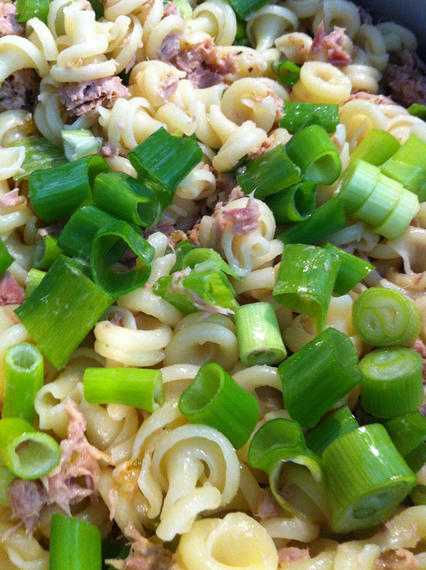
In a large bowl, toss drained pasta with Italian tuna packed in olive oil. Then, add all of the remaining ingredients and toss gently.
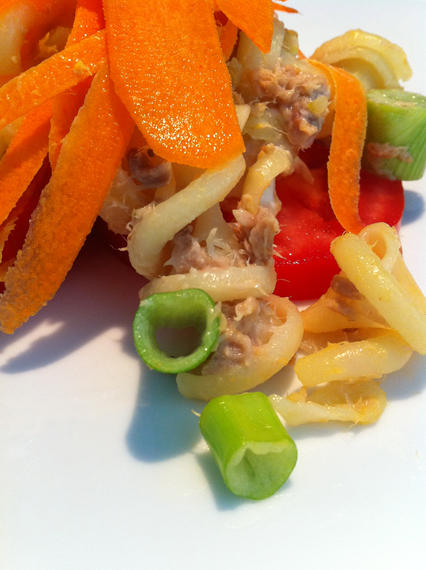
Serve salad on or near sliced tomato and top each portion with carrot shavings.
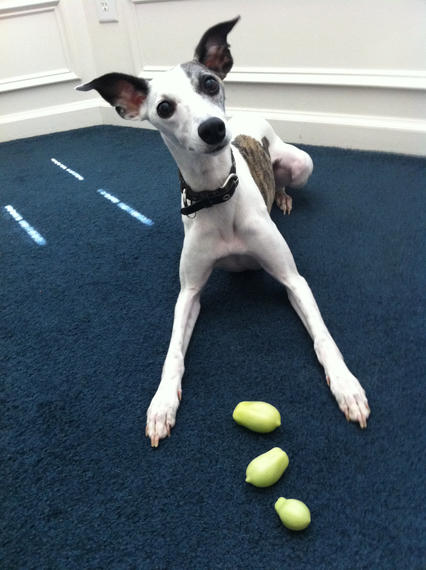
Portia The Devil Dog
…posing with her kill of 3 tomatoes plus 2 buds just starting to flower.
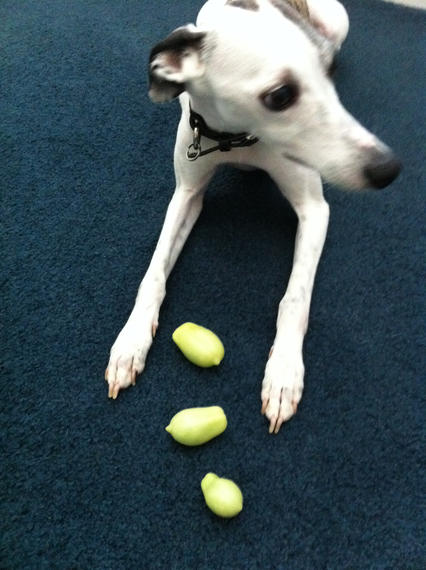
Are we done here?
Unapologetic, she’s ready to spring off and cause more distruction.
What disaster will her next rampage cause?
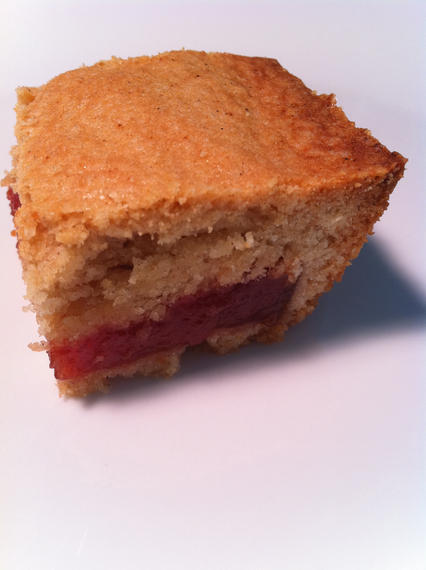
Masa Real
Don’t ask me to explain the name. I’m told it has no real (ha! real… oh, nevermind I’m tired) translation. But, make no mistake. This is one of the best things you’ll ever put in your mouth. Seriously.
In our experience and to the best of our knowledge, the term pastelitos usually refers to the puff pastries filled with guava or guava & cream cheese. And, usually (but, not always), Masa Real tends to refer to a dense cake or cookie filled with guava.
Any Cubans out there? Please let me know if I’ve lost something in transaltion. Now, I’ll be getting back to my little squares of deliciousness filled with (still warm… yum!) guava heaven.
Masa Real
makes one 8×8″ square baking dish
2 cups AP flour
1 Tablespoon corn starch
1 teaspoon baking powder
1/2 teaspoon cinnamon
1/4 teaspoon fine sea salt
1 cup sugar
2 eggs
1/2 cup (one stick) unsalted butter, softened
1 teaspoon vanilla
guava paste or guava jam
Preheat oven to 350 degrees F.
Sift flour, cornstarch, baking powder and cinnamon into a small bowl. Set aside.
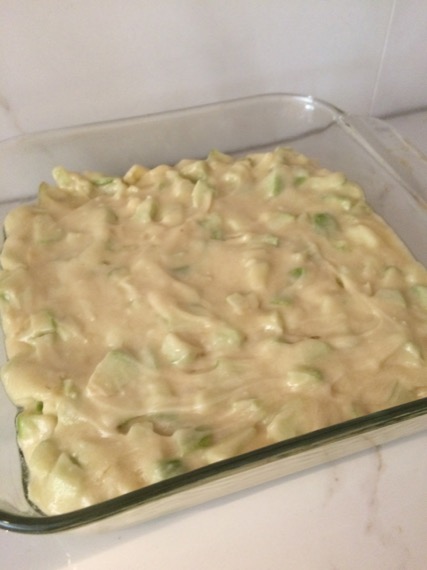
Cream butter and sugar. Add eggs and vanilla. Gently stir in dry ingredients. Divide dough in half. Spread the first half on the bottom of a 8×8 inch buttered baking dish. Slice guava paste into 1/4 inch slices. Place in a single layer over the soft batter. Then, top with remaining batter. Carefully spread batter to cover all of the guava paste.
Bake at 350 degrees F for 35-40 minutes. Or until the top is golden and the center is firm to the touch.
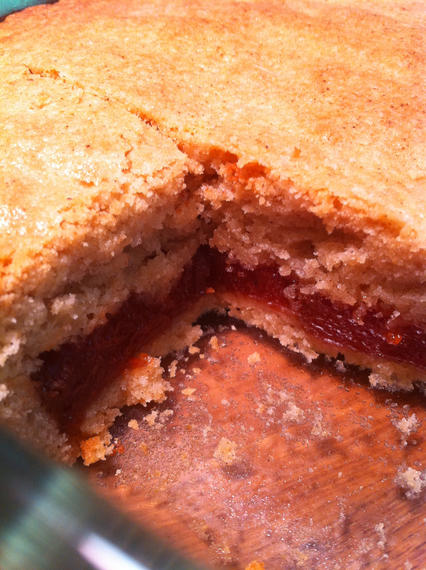
Yum is the word.
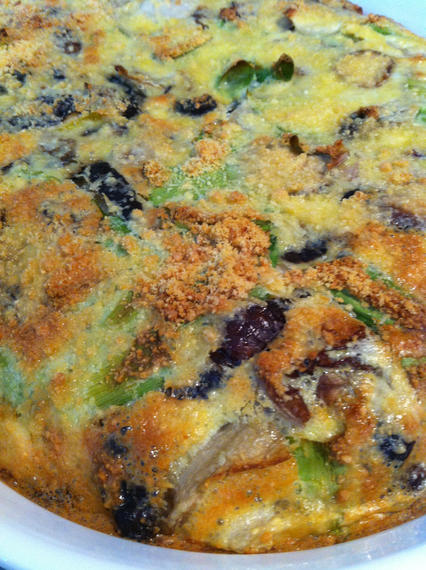
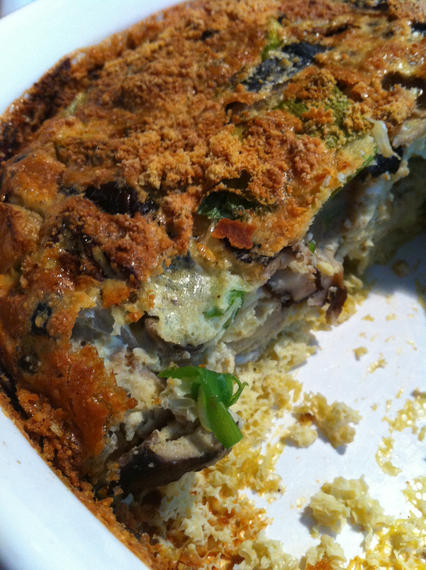
Leftover veggies always find their way into my frittatas. Roasted radicchio, shiitakes, and endive from last night’s dinner added the perfect touch to today’s super simple lunch.
Radicchio, Shiitake, and Endive Frittata
makes one casserole dish
8 eggs
3 scallions, roughly cut
1/2 head leftover Roasted Radicchio, chopped
1 head leftover Roasted Endive, chopped
1 cup leftover Roasted shiitake mushrooms, sliced
2 Tablespoons Parmigiano-Reggiano
Salt & Pepper, to taste
2 Tablespoons Parmigiano-Reggiano, grated
2 Tablespoons bread crumbs
Preheat oven to 375 degrees F.
In a large mixing bowl, break 8 eggs. Whip vigorously. Then, add all remaining ingredients. Stir to combine and pour into a large casserole dish. In a food processor, combine Parmigiano-Reggiano and bread crumbs. Pulse until finely grated. Sprinkle over casserole.
Place casserole in preheated oven and bake at 375 degrees F for 45-55 minutes, or until fully cooked in the center. Serve with sliced tomatoes or tomato salad.
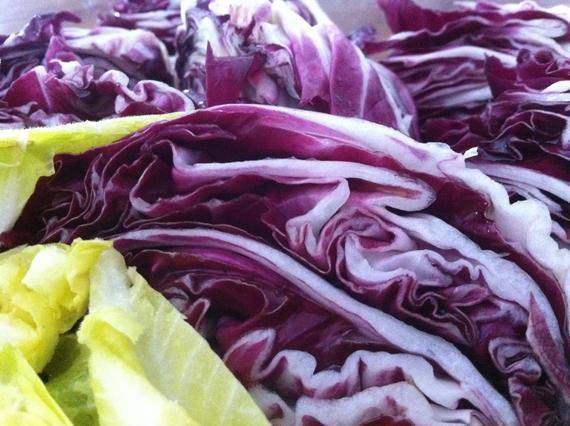
Allowing the heads to remain slightly damp, aids in the even application of olive oil and brings a little steam into the oven. This helps to evenly cook these hearty heads with lots of nooks and crannies.
(If you were to apply the olive oil to dry heads, it would take an excessive amount of olive oil to do the job. And, it would turn these beautiful fresh heads into a greasy mess.)
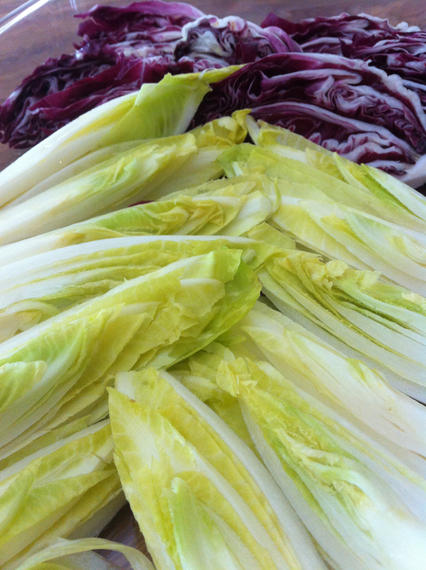
Roasted Radicchio & Endive
1 head Radiccio, washed & cut into wedges
4 heads endive, washed & cut into wedges
olive oil, as needed
red wine vinegar, as needed
Salt & Pepper, to taste
Preheat oven to 375 degrees F.
In a large bowl, toss damp wedges with olive oil and a light drizzle of red wine vinegar. Spread evenly over a large roasting pan. Sprinkle with salt & pepper. Roast for 25-30 minutes, or until edges begin to turn crispy & golden.
Drizzle with a very small amount of balsamic vinegar, if desired. Serve as a warm salad or toss with whole grain pasta and make it a meal.
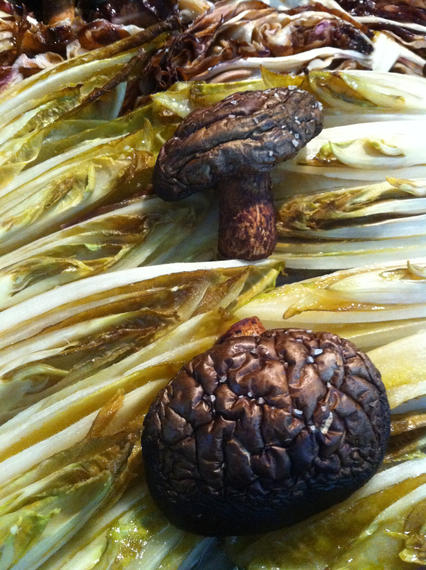
Some shiitake mushrooms provide a lovely edible garnish to the dish.
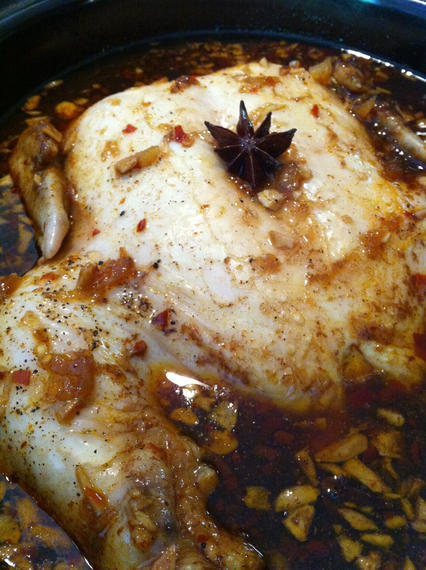
Slow poaching creates a tender chicken with almost zero effort. Simply:
1. Create a poaching liquid.
2. Bring it to a simmer.
3. Add your chicken or protein of choice and vegetables.
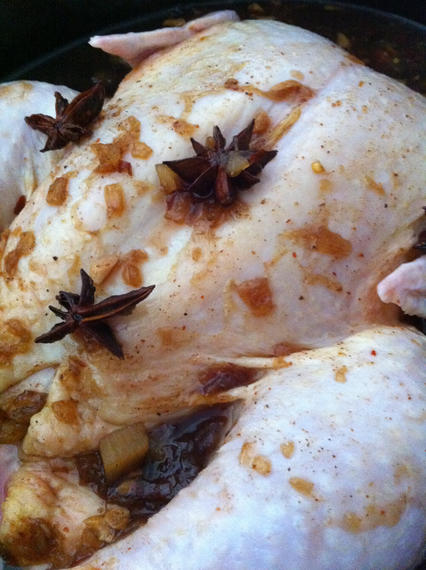
Chicken Poached in Rice Wine
serves 4
1 cup high quality rice wine
1/2 cup soy sauce
4-5 cup chicken stock (or, as needed to cover chicken)
1 Tablespoons Sriracha Sauce
3 cloves garlic, finely minced
3 whole cloves
3 whole star anise
1 teaspoon black pepper, freshly grated
1 teaspoon red pepper flakes
1 small bottle pineapple jam
1 whole chicken
Preheat oven to 375 degrees F.
In a dutch oven, combine all ingredients except chicken. Bring to a simmer. Allow liquid to simmer for approximately 5 minutes. Add chicken and cover. Place in preheated oven. Poach until thoroughly cooked and tender.
(Approximately 1 hour to 1 hour and 30 minutes. Chicken should be fully cooked and tender.)
Serve with rice or buttered potatoes and vegetables.
|
|