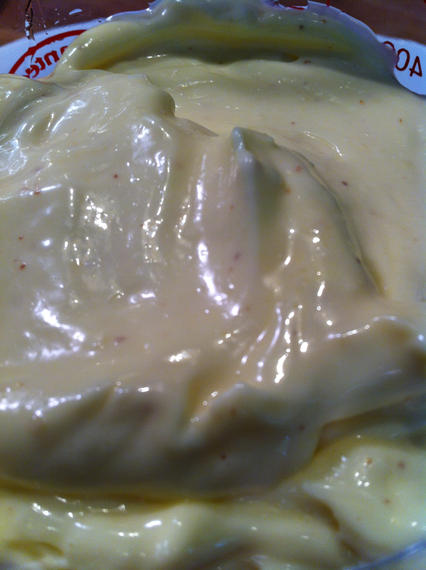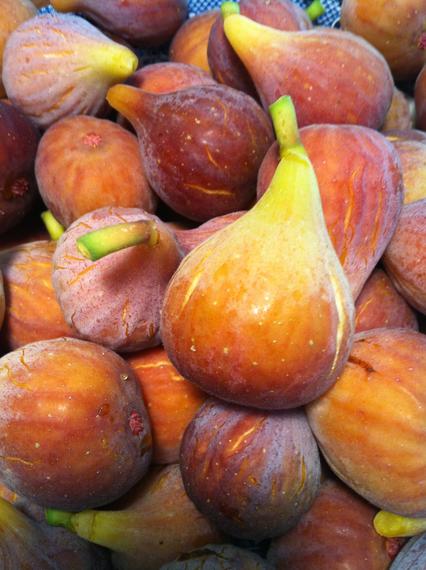
Everything sounds better in French… (And Italian) Slap a French name on fig preserve and the charm factor goes sky high. And, that sweet little market on the corner won’t hesitate to add $10 to the price tag.
But, it’s still just fruit and sugar.
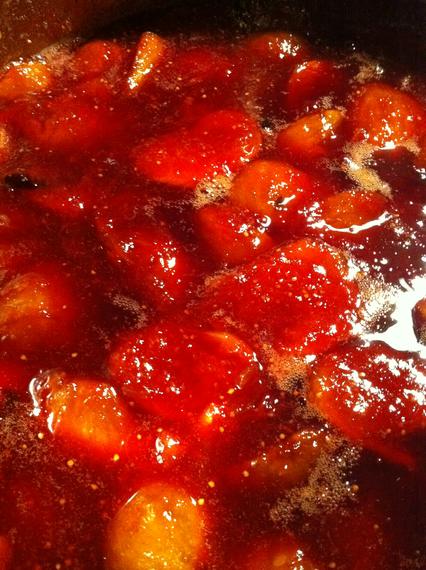
This is so easy. No recipe is required. It’s a simple ratio. Add equal parts fruit and sugar. Then, throw in a little something tart for interest. The color of the finished preserve will depend on the figs. If your figs are mostly green, you’ll end up with blush or golden jam. If your figs are deep purple, you’ll end up with a color similar to the above photo.
This recipe is intended for fig preserve to be eaten now. If canning, follow proper canning techniques.
Fig Preserve
approximately 4-5 cups
1 part fresh figs, washed and halved
1 part sugar
juice of 1 or 2 lemons, as desired
Add all ingredients to a large heavy-bottomed pot, bring to a gentle boil.
Reduce mixture until you achieve the proper consistency. Let cool. Then, store in a large glass container in the fridge. Eat & enjoy!
This is recipe is intended for immediate consumption. If you wish to can your preserve. Follow proper canning techniques.
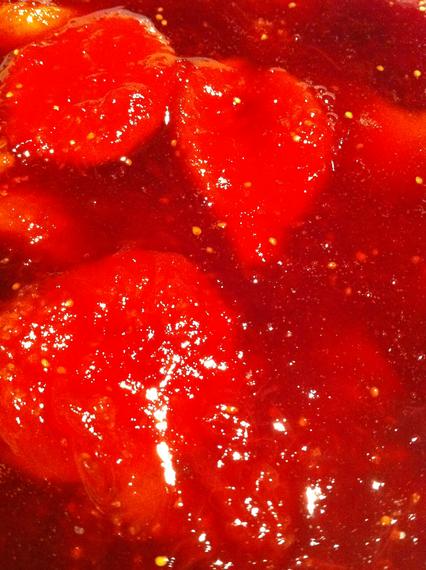
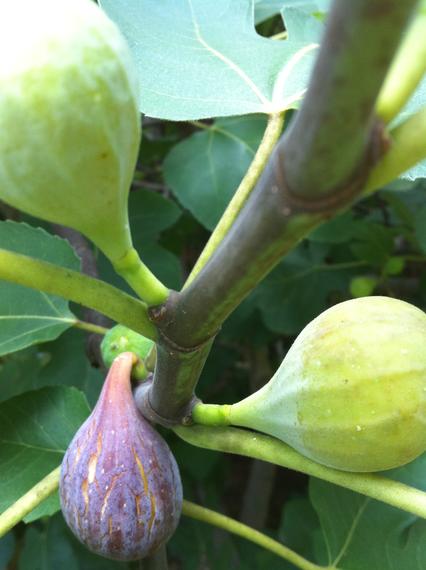
The first ripe figs are almost bursting after this weekend’s heavy rain. Our brown turkey fig tree is littered with green figs that will ripen any day. Today, we had about two overflowing handfuls of ripe figs.
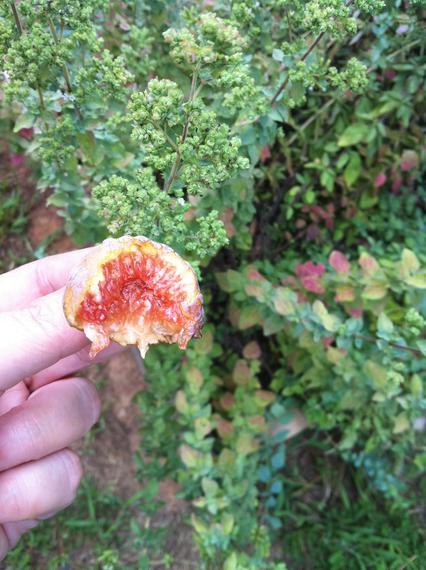
Liquid sugar hinting of honey… yum
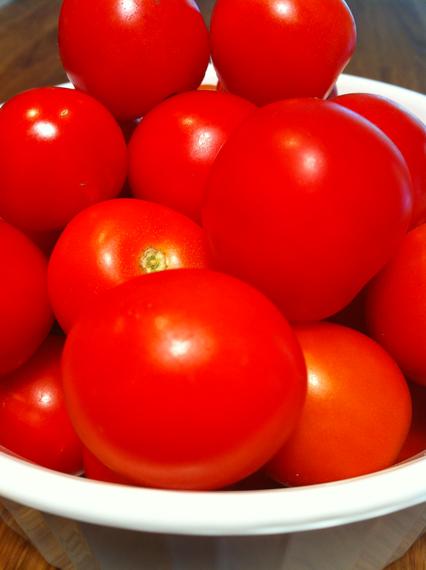
And, we have another bowl of tomatoes to use tonight. I predict tomato salad.
Tomato Salad
1 bowl of cherry tomatoes, washed then sliced in half
1 small Vidalia onion, finely diced
1 green pepper, diced
Extra Virgin Olive Oil, as needed
red wine vinegar, as needed
black pepper, freshly ground
sea salt, finely ground
Combine halved tomatoes, diced onion and diced green pepper in a salad bowl. Then, immediately prior to serving, drizzle with olive oil, red wine vinegar. Sprinkle generously with fresh, finely ground black pepper and salt.
Serve with crusty bread that has been crisped in the oven to sop up all the lovely juices.
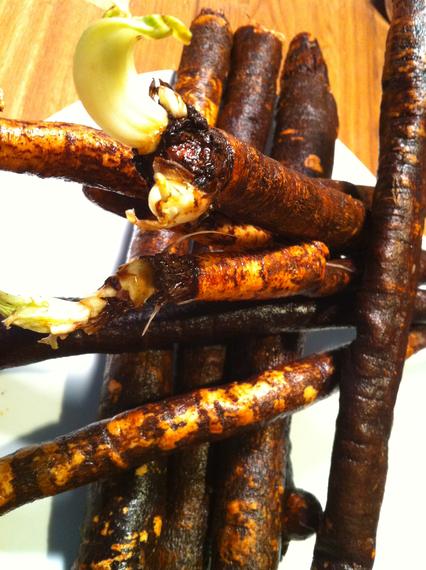
I’ve never hated a vegetable before. Though, I do find canned vegetables more than a little bit offensive. But, I absolutely and utterly hate salsify.
I don’t hate the flavor. That’s fine. It’s rather mild and ordinary. It reminds me of sweet parsnips. On a number of occasions, I’ve read about salsify and it’s so-called exotic flavor of oysters or artichokes. Yeah, ok. Whatever. I’m not seeing it. In reality, it’s very ordinary. And, in my opinion, it is in no way worth the effort it takes to deal with the mess. The mess that I’m referring to is the sap…
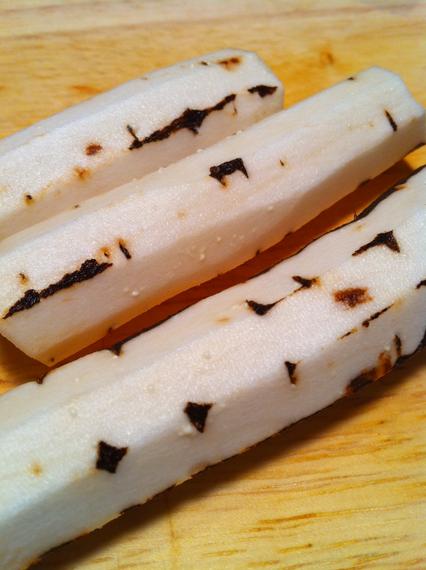
The evil sap oozing out of the pores
Now, I’ve already washed this piece. But, almost instantly, it begins oozing another round of very sticky, rubbery, glue-like sap. This sap is truly disgusting. It sticks to everything. And, it’s very hard to remove. My vegetable peeler is still covered in sticky, gooey sap. It’s taking a third go-round in the dishwasher, right now.
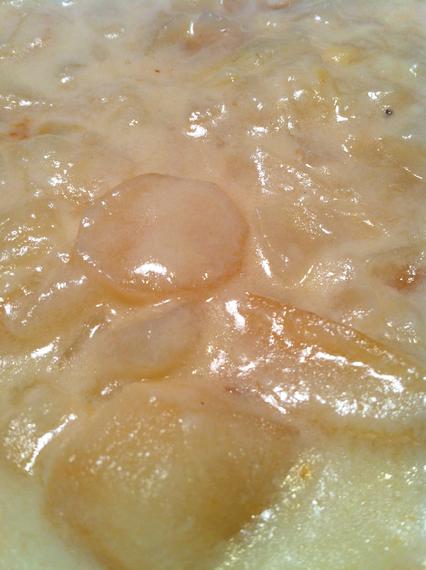
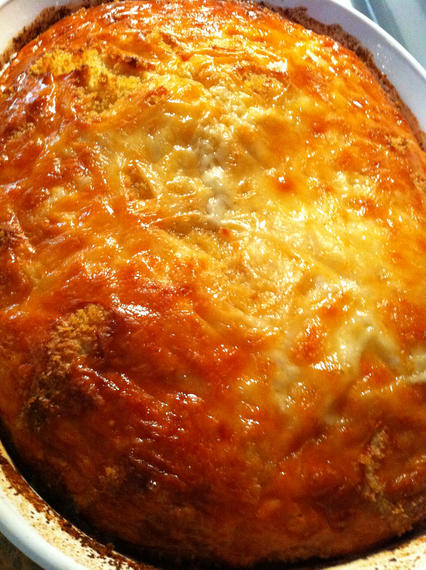
Following Food and Wine’s recipe, we ended up with a lovely gratin that is creamy and sweet. In this state, I can see where the comparison comes into play. This could easily be adapted into a sweet veggie chowder. I do detect a very subtle “something” that is reminiscent of sweet seafood… a very diluted sweet clam, possibly. But, it is extremely subtle. I may be kidding myself. I may be trying to convince myself that the time-wasting headache was worth all of the hassle.
Will I ever buy salsify again? Probably not. But, if I do, I will treat it like the toxic substance that it is. Try this recipe… if you dare.
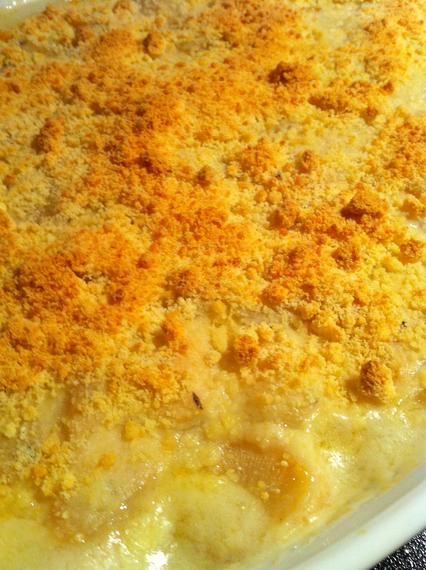
Please excuse the processor-ground cheese… I was too spent to care.
Rich & Creamy Salsify
adapted from Food & Wine’s recipe
1 large Vidalia onion, finely diced
4 Tablespoons unsalted butter
1 Tablespoon olive oil
4 Tablespoons AP flour
1/2 quart whole milk
1 kg salsify (cleaned, washed, cut & soaked in water… drain & soak again)
salt & white pepper, to taste
1/4 teaspoon nutmeg, freshly ground
1/4 cup Parmigiano-Reggiano, finely ground
Saute onion in 1 Tablespoon olive oil and 1 Tablespoon butter in a large heavy bottomed stock pot. Saute until tender, but, not caramelized. Add remaining butter. Stir until melted. Add flour and allow to cook briefly. Stir in milk carefully. Be careful to avoid the formation of lumps. When the mixture is smooth and well-combined. Add salsify and grated nutmeg. Bring to a gentle simmer. Allow to simmer for 20-30 minutes. After 20 minutes, preheat oven to 375 degrees.
Pour mixture into a large, shallow casserole dish. Top with grated Parmigiano-Reggiano.
Bake for 20-25 minutes.
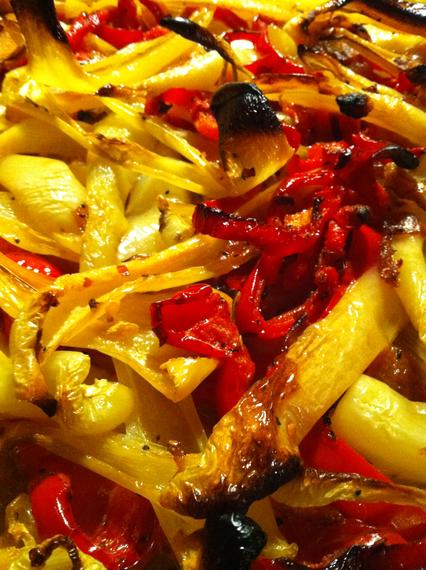
So, with another bucket of peppers to use and not a lot of time on my hands, I decided to speed up my normal recipe. The result might even be better than my standard.
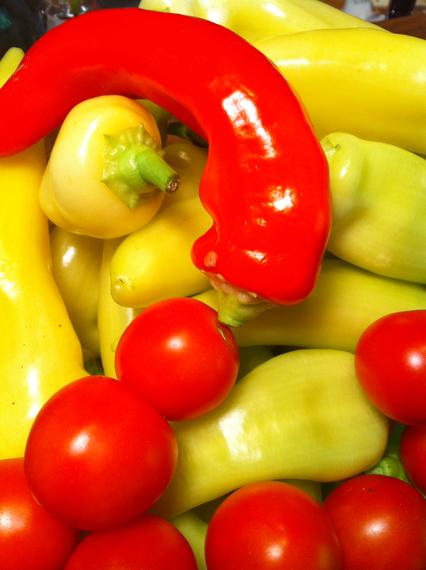
Quickie Peppers & Onions
1 bucket (10-12 cups) of banana peppers, cleaned & quartered
2 large Vidalia onions, cleaned & thinly sliced
2 cloves garlic, finely diced
1/2 teaspoon red pepper flakes
1/2 teaspoon black pepper, freshly ground
salt, to taste
olive oil, as needed
Preheat oven to 425 degrees as you prep your vegetables.
In one very large bowl, add all ingredients and toss to combine. Drizzle generously with olive oil. Toss again. And, add another generous drizzle of olive oil. Pour into one very large roasting pan. Roast for 25 minutes. Remove roasting pan from the oven and flip everything with tongs. Place roasting pan back in the oven and roast for 20-30 minutes… or until peppers & onions reach your desired level of caramelization.
This time our peppers & onions garnished grilled chicken, sausages, & burgers. The leftovers continue to garnish sandwiches this week. And, they’ll probably make it into this weekend’s frittata.
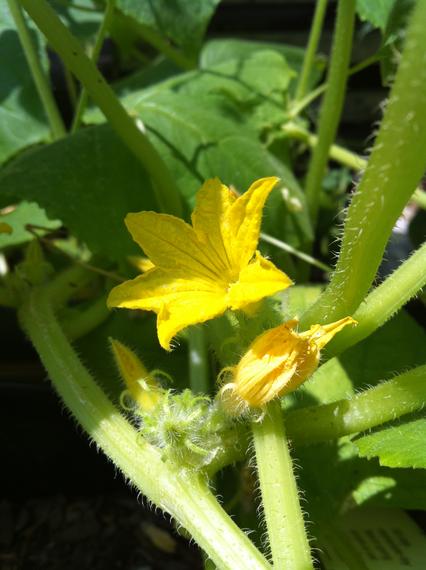
Lemon Cucumber Blossoms
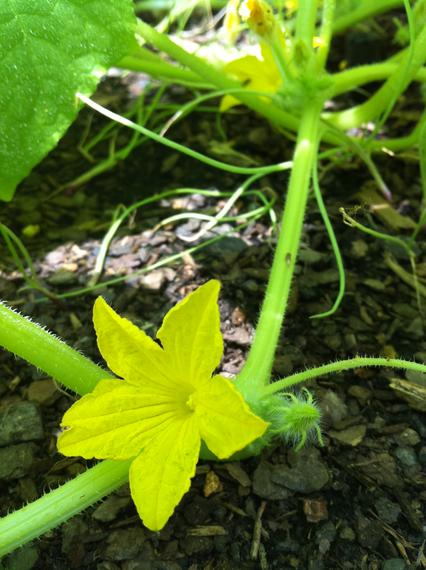
And…
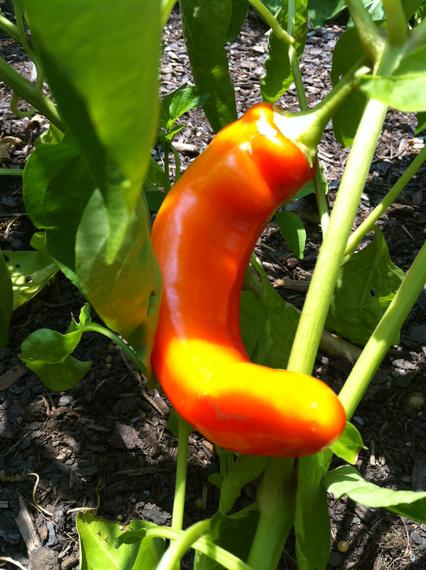
Orange Peppers
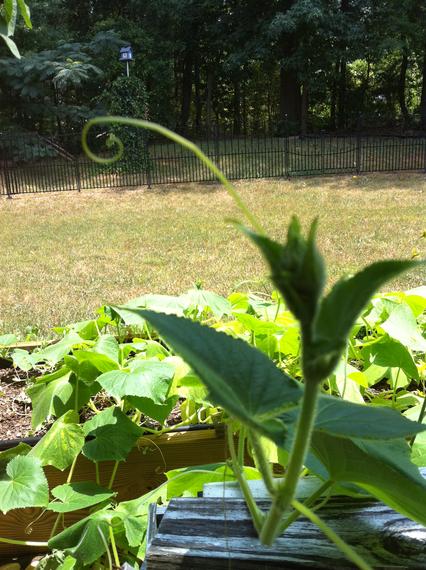
We’re watering the garden and the grass is dying of thirst.
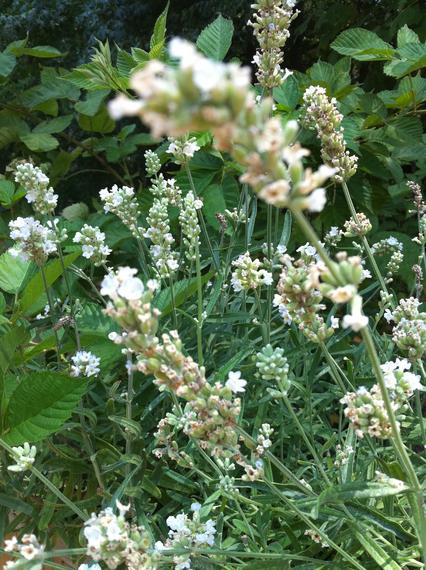
A forest of lavender
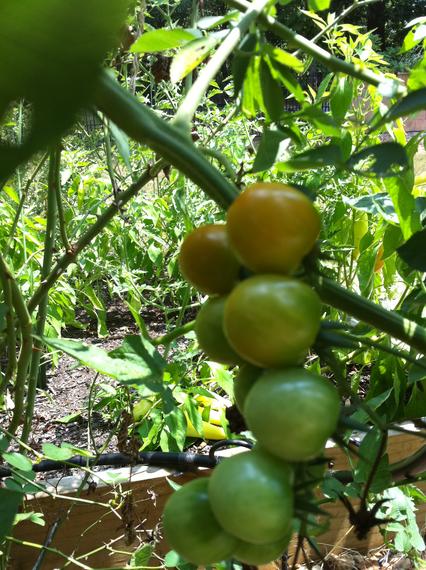
And, more tomatoes than we can eat.
This week’s harvest:
One bucket of banana peppers
&
One big bowl of cherry tomatoes
(2 varieties)
&
A third large bouquet of oregano blossoms
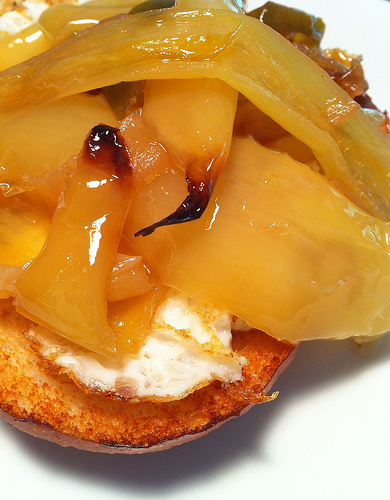
Pepper & Onion Egg Sandwich
One of my all-time favorite breakfasts!
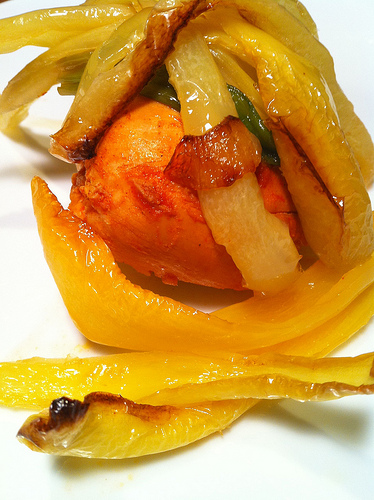
Then, for dinner… peppers & onions with Pollo alla Cacciatora
I like to plate it up with the peppers & onions on top. Then, I serve a saucer of red sauce on the side.
(the same red sauce from my pollo alla cacciatora)
But, first…
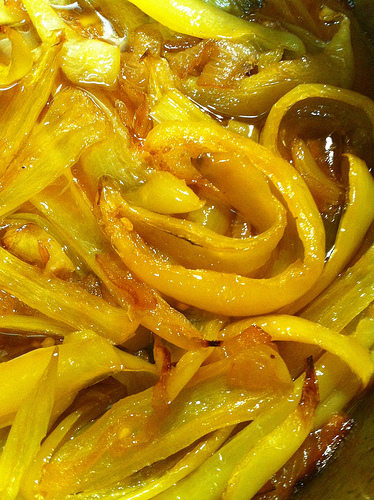
You need to make the peppers & onions.
Peppers & Onions
one small bucket of banana peppers, cut into strips
2 large Vidalia onions, peeled & thinly sliced
1 bunch of green onions, cut into 3 inch strips
2-3 cloves garlic, thinly sliced
1/2 teaspoon red pepper flakes
olive oil, as needed
Preheat oven to 375 degrees F.
In a large heavy bottomed pot or dutch oven, saute onions in olive oil until the edges are golden brown. Add green onions and banana peppers. Place pot in preheated oven and roast peppers for two 20 minute intervals. Toss at each interval. Then, raise the heat to 425 degrees F and continue roasting until they reach the desired level of caramelization.
Serve on toasted Italian bread with scrambled eggs (my Gram’s favorite), fried eggs (my favorite), sausage, chicken, sliced beef… or, a million other ways.
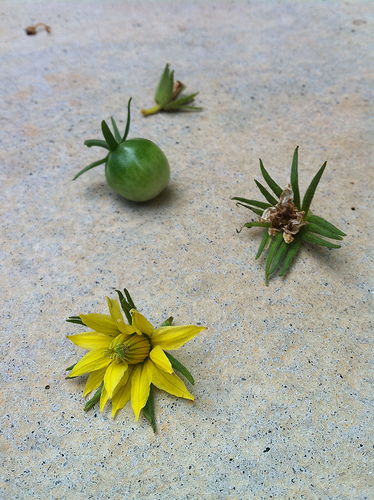
The Aftermath
Portia…

AKA “Spawn of Satan”
In about 2 minutes, she managed to destroy about a dozen green tomatoes and tomato blossoms. She also has a taste for my fig leaves. (my new baby Kadota’s fig leaves). I’m willing to sacrifice a few tomatoes. But, if she kills one of my new fig trees. She’s going to be in the doghouse. (Well, after we buy a doghouse.) Between Portia and the other wild life critters, it really is a challenge to keep everything alive.
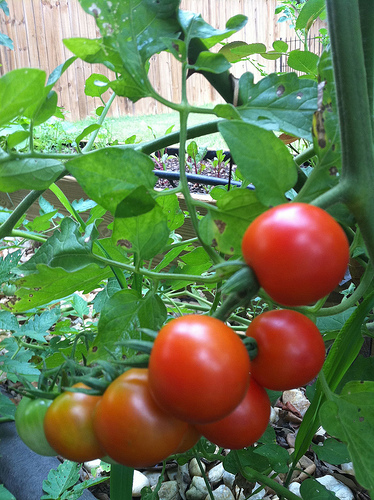
But, we did manage a mini harvest:
8 cherry tomatoes
a handful of blackberries
4 baby radishes
1 baby carrot
one bouquet of oregano
several sprigs of silver thyme
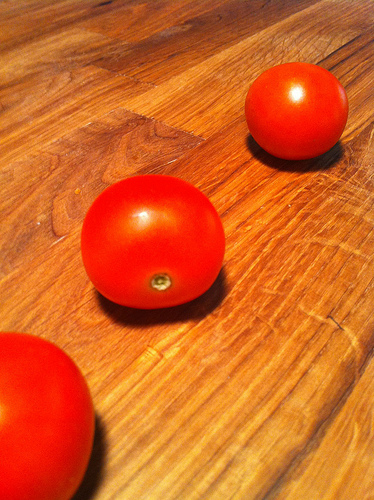
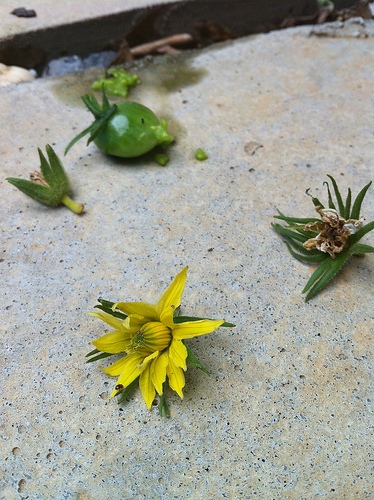
Oh, well. There’s no crying over spilt milk… or crushed tomatoes.
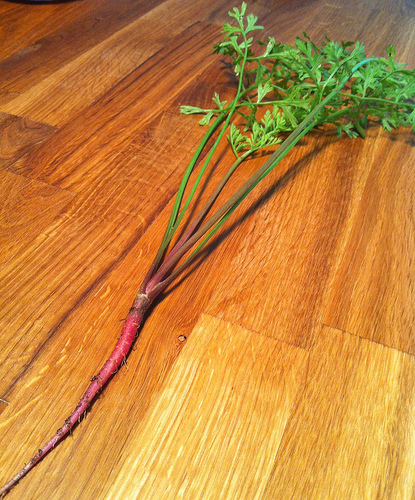
Poor baby, my purple carrots (and assorted heirloom carrots) clearly need another week… or three.
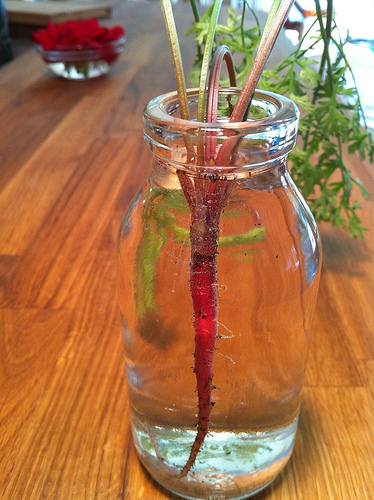
Can I save him?
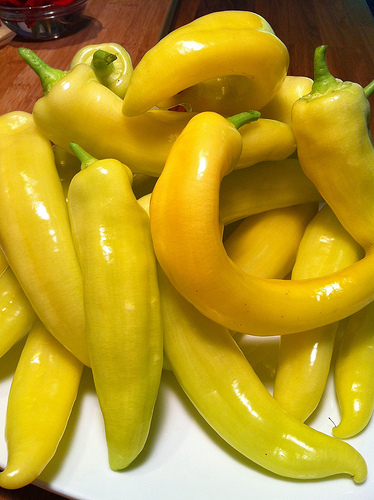
Over 20 banana peppers harvested and another 20-30 need another week.
We ate a handful of sugary sweet cherry tomatoes straight off the plant. Tomatoes are sweetest when eaten in the garden… still warm from the sun.
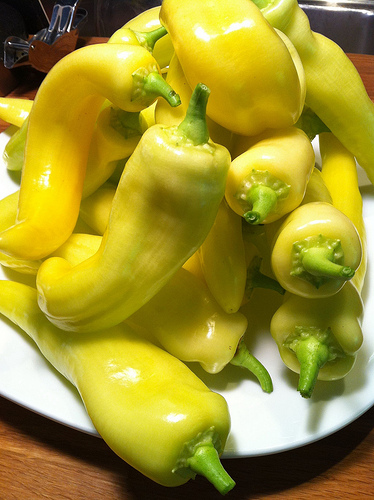
What’s for dinner? Peppers and onions… obviously.
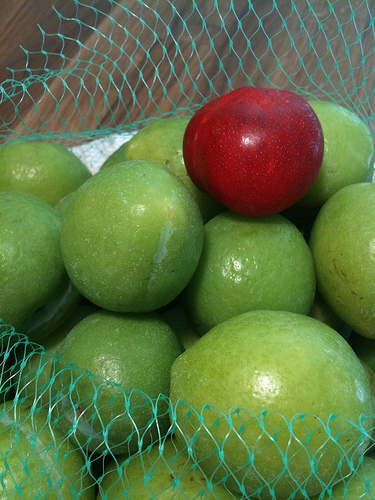
Ume plums (also known as Prunus mume, Japanese apricot, and Chinese plum) are popular in Korea, Japan and China. Even the bright red one (above) had a good dose of the puckery tart/sour flavor this fruit is known to possess. Here are some recipes to use this interesting fruit. I think I’ll start with one batch of ume jam and one bottle of umeshu
Ume Jam
(recipe adapted from BeyondBoulder)
900 grams ume
700-900 grams sugar
water, approximately 2 cups
First, remove every bit of the stem from each plum. Then, soak from 4 hours to overnight. In a large pot, bring water, sugar and plums to a boil. Then, reduce to a simmer and cook until the desired consistency is reached. Remove pits when the flesh is tender enough to release them. (If canning, follow proper canning procedures.)
Umeshu
(adapted from Blue Lotus)
2 to 2 1/2 lbs green (unripe) ume plums
1 1/2 to 2 lbs rock sugar
7-8 cups shochu, high quality vodka or brandy
Remove all stems from the plums. Wash them well. Poke several holes in each plum. Then, layer plums and sugar in a large glass jar. Cover with shochu or vodka. Let mixture sit in cool, dark place for 2-3 months. (Or, up to one year)
Korean Green Plum Liqueur
(Maesil Ju)
(adapted from Homebrew Korea)
2 1/2 cups brown sugar or brown rock sugar
1 cup tupelo honey
3 cups green plums, washed with stems removed
2 small bottles of soju or one bottle of brandy
Combine all ingredients in a large glass jar. And, set in a cool, dark place for 2-3 months, or longer.
Ume Miso
(adapted from Obachan’s Kitchen)
1 part ume
1 part sugar
1 part miso
Some recipes call for layering plums, sugar and miso. Then, stirring on a daily basis. Others suggest cooking the mixture, then bottling and stirring on a daily basis until the pits can be extracted.
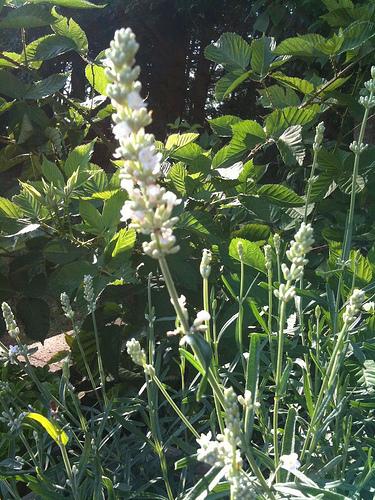
Blooming Lavender and Blackberry Bushes
The blackberry bushes, lavender boxes, and blueberry bush are doing exceptionally well. But, it’s a race to pick the ripe blueberries and blackberries before the squirrels, rabbits and raccoons can eat them.
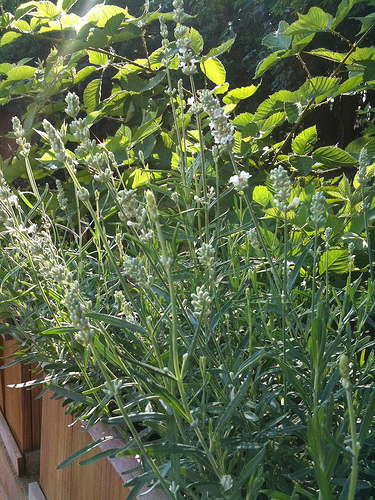
Next year, I think I want to fill all the boxes with lavender. It’s gorgeous and smells divine.
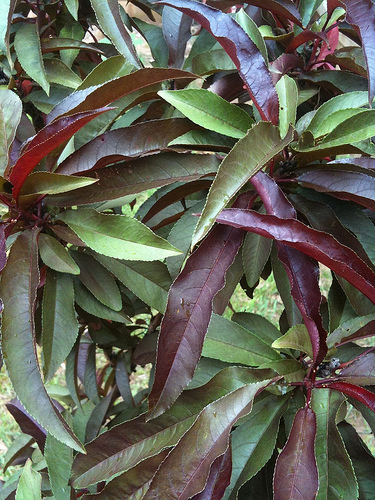
My new bonfire peach… I love the leaves.
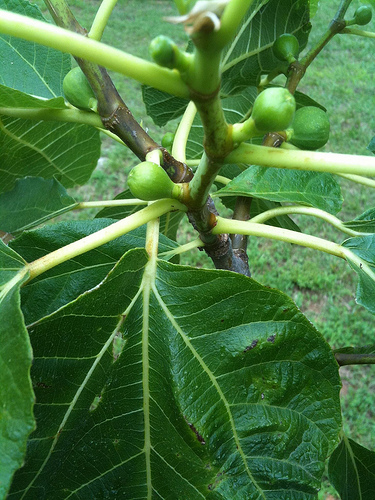
My new kadota fig tree has over 2 dozen figs.
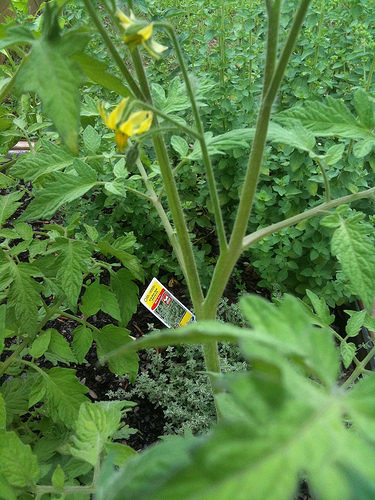
The Mr Stripey tomato plants are covered in buds. (There are over a dozen per plant.)
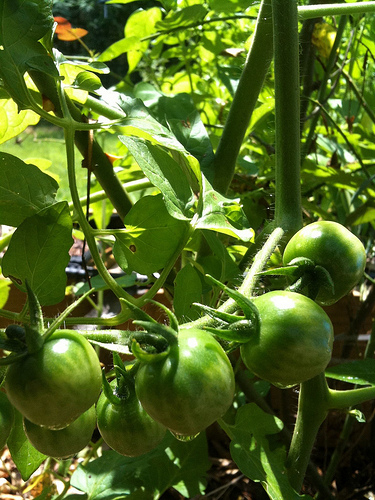
There are 4 large clusters of heirloom cherry tomatoes that are almost ripe. I love the green stripes. Should we place bets on the humans vs wildlife game? Will we get to eat them… or will it be squirrels? … or the raccoons?
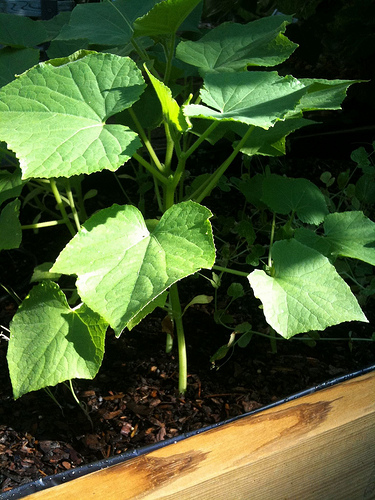
My lemon cucumber sprouts are growing daily. This was taken a week ago.
(And, they’ve already grown another 4-6 inches.)
Update:
Everything is thriving… except:
Peas (a bit stunted by the heat, I think)
Chamomile and Marigolds (The rabbits are eating them.)
Only 6 artichoke sprouts left (The rabbits are eating them.)
Adding:
Artichoke sprouts that I will try to keep alive through the winter.
|
|